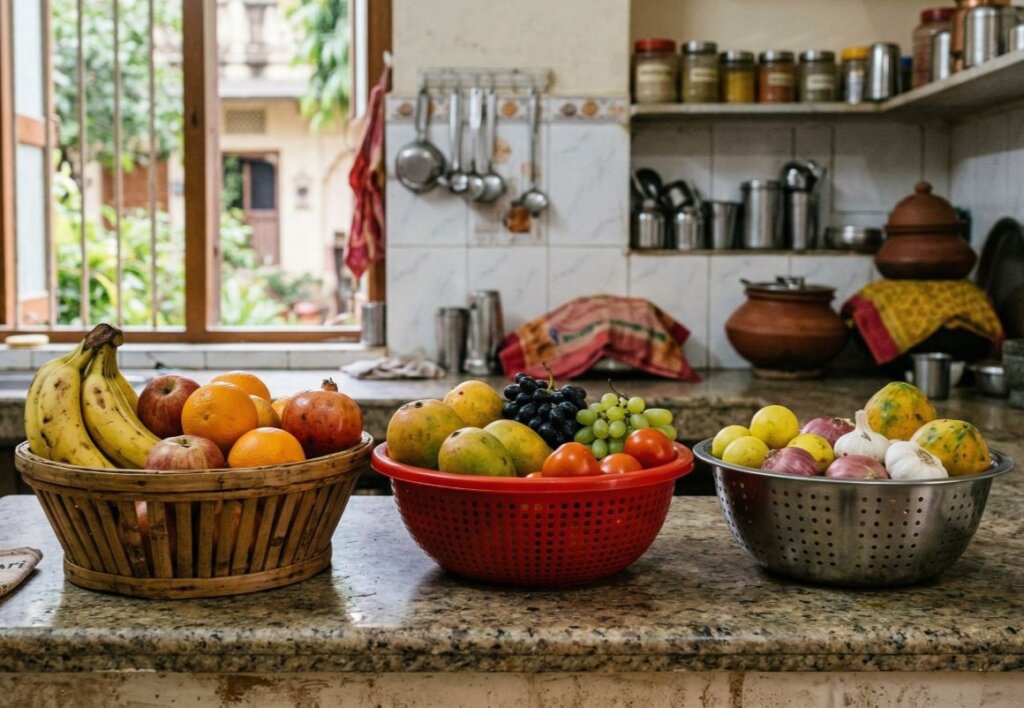
Indian kitchens are busy, warm, and often exposed to humidity, dust, and insects. Many households buy fruits every few days, yet it is common to see them overripen too quickly, attract fruit flies, or lose freshness sooner than expected. This is not always because of fruit quality. In most cases, the issue lies in how fruits are stored at home.
Proper fruit storage is not about expensive appliances or complex methods. It is about understanding airflow, moisture, hygiene, and placement within the kitchen. When done right, fruits stay fresh longer, taste better, and reduce unnecessary food waste.
This guide explains how to store fruits properly in Indian kitchens using practical, everyday solutions that work in real homes.
Why Fruit Storage Is Challenging in Indian Homes
Climate and Temperature
India experiences warm to hot weather for most of the year, with high humidity in many regions. Heat accelerates the natural ripening process of fruits, while humidity encourages mold and bacterial growth. Without proper ventilation, fruits deteriorate much faster in such conditions.
Open Kitchens and Air Exposure
Many modern Indian homes have open kitchens connected to living or dining areas. While this improves visibility and ventilation, it also exposes fruits to dust, cooking fumes, and insects. Fruits left uncovered in these environments require additional protection without blocking airflow.
Mixed Storage Habits
It is common to store all fruits together in one place for convenience. However, different fruits release different gases and moisture levels. Mixing them often causes faster ripening and spoilage, especially when ethylene-producing fruits are stored with sensitive ones.
Basic Principles of Proper Fruit Storage
Air Circulation Is Essential
Fruits need constant airflow to release moisture and heat naturally. When air circulation is blocked, moisture gets trapped around the fruit surface. This creates ideal conditions for mold and soft spots to develop.
Avoid Excess Moisture
Many people wash fruits immediately after buying them and then store them. This trapped moisture shortens shelf life and increases the risk of spoilage. Fruits should always be washed only before consumption.
Separate Ethylene-Releasing Fruits
Fruits such as bananas, apples, and mangoes release ethylene gas as they ripen. This gas speeds up ripening of nearby fruits. Keeping these fruits separate helps slow down spoilage and improves overall freshness.
Where to Store Fruits in an Indian Kitchen
Kitchen Countertop
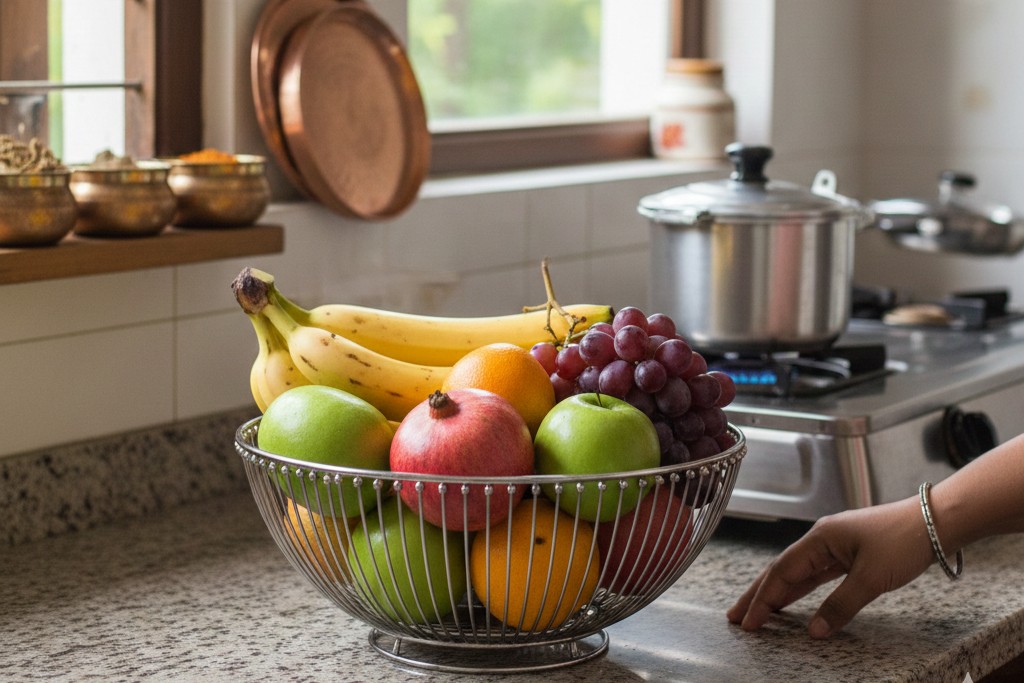
Most fruits are best stored at room temperature, especially if they will be consumed within a few days. A well-ventilated fruit basket placed away from gas stoves, sunlight, and heat sources works best. This allows fruits to remain visible and accessible while staying fresh.
Refrigeration
Certain fruits like grapes, berries, and cut fruits benefit from refrigeration. However, refrigeration can dull flavors and textures if used incorrectly. Only fruits that truly require cooling should be refrigerated.
Avoid Closed Cabinets
Closed cupboards restrict airflow and trap heat and moisture. This often results in faster spoilage and unpleasant odors. Cabinets are better suited for dry goods rather than fresh produce.
Choosing the Right Fruit Storage Container
Why Material Matters
The material of a fruit container directly affects hygiene and airflow. Plastic containers often trap moisture and can absorb odors over time. Wooden baskets may look appealing but absorb moisture and are difficult to clean thoroughly.
Benefits of Stainless Steel Fruit Baskets
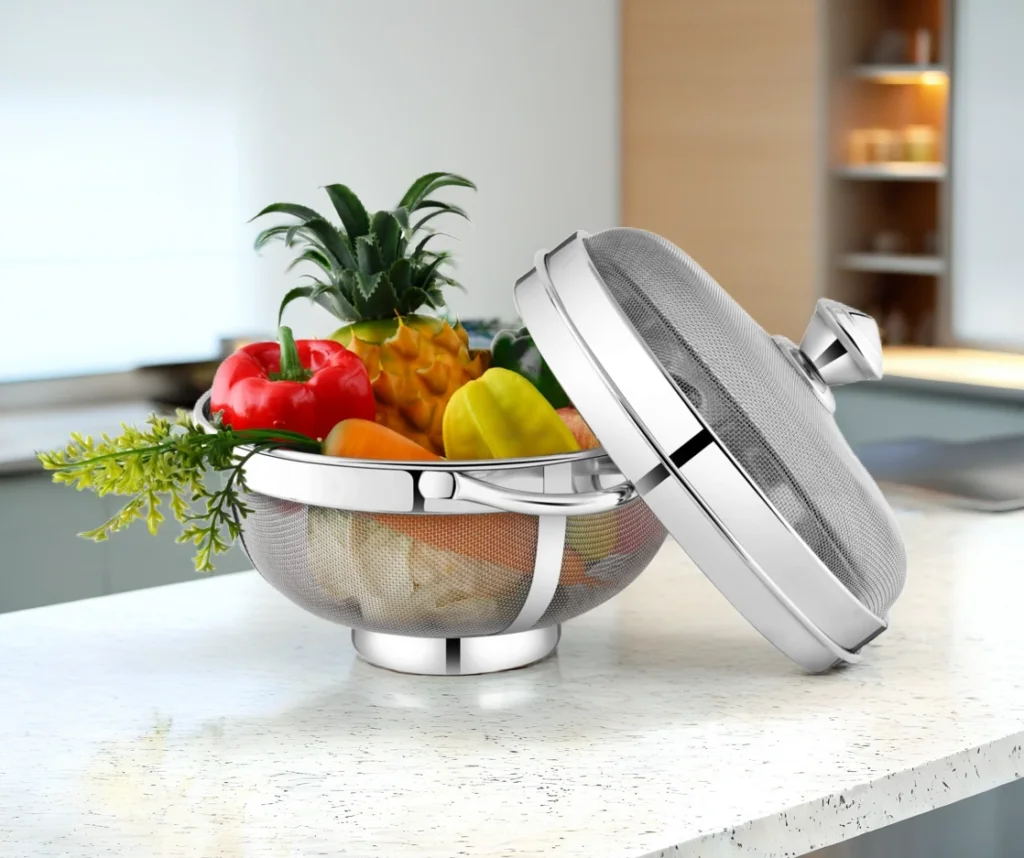
A stainless steel fruit basket allows proper airflow, maintains hygiene, and resists rust. Baskets with a fine net cover help protect fruits from flies and dust while still allowing ventilation.
This makes stainless steel fruit baskets especially suitable for Indian kitchens where hygiene and durability matter.
How to Store Common Fruits Correctly
Bananas
Bananas release a high amount of ethylene gas. Keeping them separate from other fruits helps prevent premature ripening. Placing them in an open, ventilated basket avoids pressure marks and bruising.
Apples and Oranges
These fruits store well at room temperature for short periods. They should be kept away from bananas and stored in breathable baskets to prevent moisture buildup. Regular inspection helps remove damaged fruits early.
Mangoes
Raw mangoes should be allowed to ripen naturally at room temperature. Once ripe, they should be consumed quickly or refrigerated briefly. Avoid stacking mangoes to prevent bruising.
Grapes and Berries
These fruits spoil quickly if exposed to moisture. Store them unwashed in the refrigerator and wash only before eating. Proper containers help prevent crushing and mold formation.
Hygiene Tips for Fruit Storage
Clean Storage Area Regularly
Dust and microbes can accumulate quickly on kitchen surfaces. Regular cleaning of fruit baskets and countertops reduces contamination. Stainless steel surfaces are easier to maintain and sanitize.
Avoid Overcrowding
Overcrowding causes fruits to press against each other, leading to bruises and uneven ripening. Allow enough space so air can circulate freely around each fruit.
Inspect Fruits Daily
Checking fruits daily helps identify overripe or damaged ones early. Removing them prevents spoilage from spreading to other fruits. This simple habit significantly reduces waste.
Ideal Solution for Indian Kitchens
For most Indian homes, a stainless steel fruit basket placed on the countertop offers the best balance of hygiene, airflow, and convenience. A design with a protective net cover helps block insects while allowing ventilation. This setup works well in both traditional and modern kitchens.
Such baskets are durable, easy to clean, and suitable for daily use. They also help keep kitchens organized and visually neat.
Conclusion
Storing fruits properly in Indian kitchens is about understanding climate, airflow, and hygiene. Avoiding closed containers, separating fruits correctly, and choosing ventilated, hygienic storage solutions can significantly extend fruit freshness.
Small changes in storage habits lead to better organization, less food wastage, and healthier consumption over time.