Ramadan is a time of generosity, community meals, and large scale food distribution. Across the Middle East, Africa and South Asia, mosques, charities and non-profit organizations serve thousands of iftar and suhoor meals every day. From mosque kitchens in Dubai to community feeding centers in Yemen and refugee kitchens in Africa, the demand for reliable food service equipment rises sharply during this holy month.
One of the most important investments for these organizations is stainless steel utensils. They must be durable, hygienic, easy to clean, and suitable for repeated daily use. Disposable plastic alternatives may seem cheaper initially, but they create hygiene issues, environmental waste, and long-term costs that are far higher.
This guide explains exactly what mosques and NGOs should buy when preparing for Ramadan food operations, and how to choose the right stainless steel utensils for large scale iftar and suhoor programs.
Why Stainless Steel Is Ideal for Ramadan Food Programs
Large scale food service during Ramadan requires materials that can withstand heat, moisture, acidic foods, and constant washing. Stainless steel is the preferred material for institutional kitchens because it meets all these requirements.
Unlike plastic, stainless steel does not leach chemicals when in contact with hot food or liquids. This is particularly important for soups, curries, lentils, and spiced dishes that are common during iftar. Stainless steel is also non porous, which means bacteria and odors do not get trapped in the surface.
Another major advantage is longevity. A well made stainless steel utensil can last for many years, even with daily use. This makes it ideal for mosques and NGOs that operate throughout the year, not only during Ramadan.
Essential Stainless Steel Utensils for Iftar and Suhoor Kitchens
Every community kitchen has different needs, but there are a few core stainless steel items that almost all mosques and NGOs require.
Stainless Steel Plates and Thalis
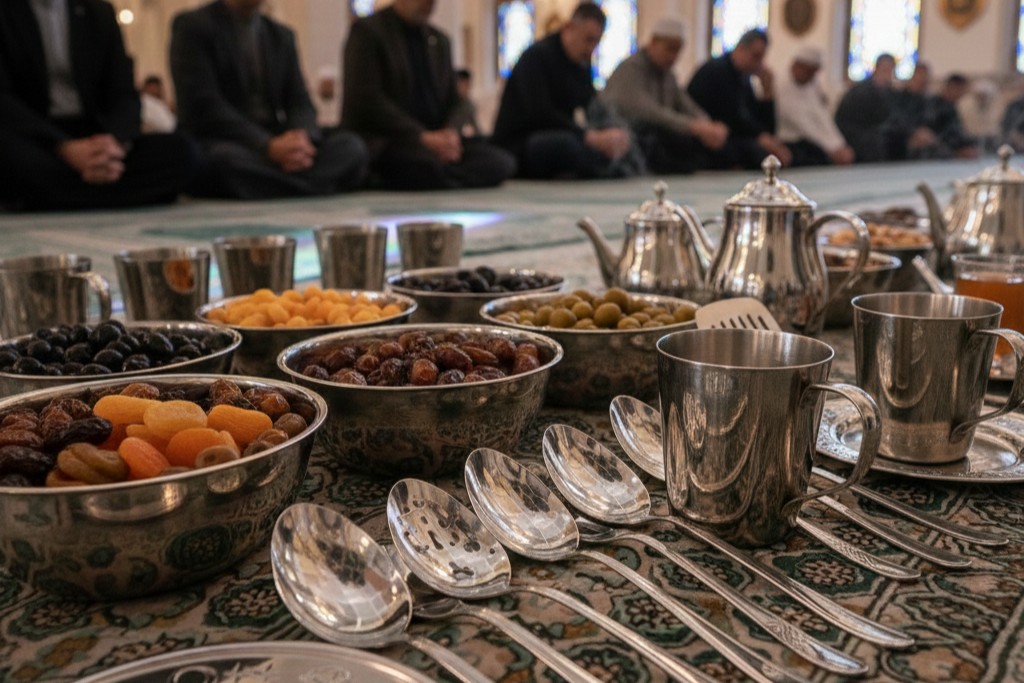
Stainless steel plates and thalis are among the most used items during Ramadan iftar and suhoor. They are used for serving rice, curries, bread, fruits, dates, and desserts in mosque dining halls, charity kitchens, and iftar tents. In large gatherings, hundreds or even thousands of plates may be in circulation at the same time.
Stainless steel is preferred because it is strong, lightweight, and easy to wash in bulk. Unlike plastic or melamine plates, it does not absorb oil, spices, or odors, which helps maintain hygiene across repeated meal services. Steel plates also withstand high food temperatures, making them suitable for hot dishes commonly served at iftar.
Stainless Steel Balti and Large Cooking Vessels
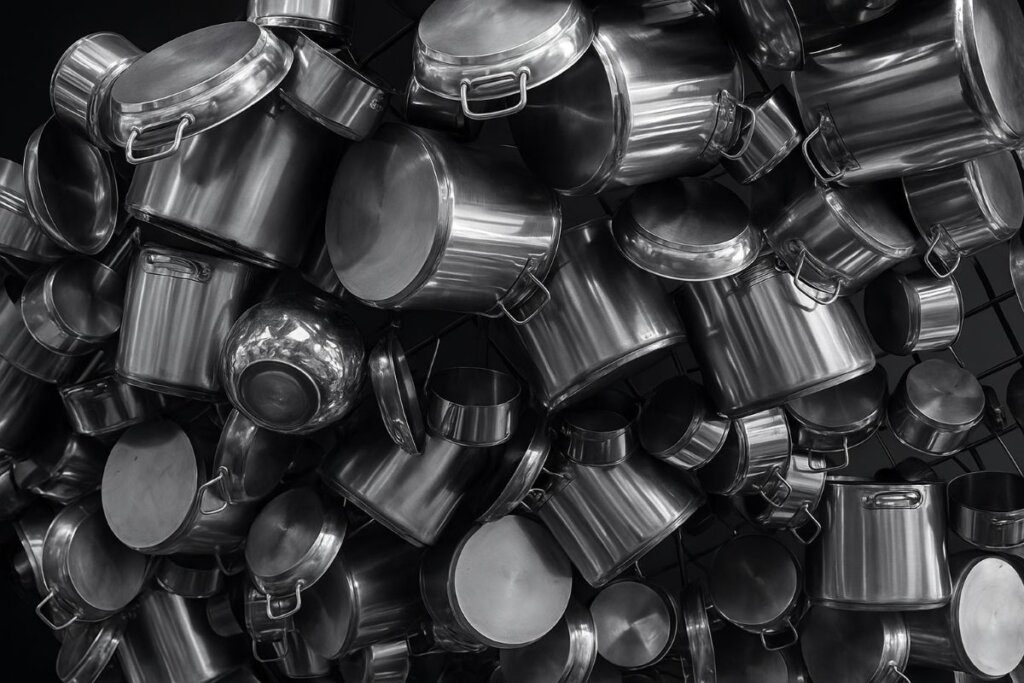
Large steel baltis are used for cooking, mixing, and transporting food. They are especially important when preparing rice, lentils, curries, or stews in bulk.
These vessels need to be strong, heat resistant, and easy to clean. High quality stainless steel baltis do not warp or corrode even after years of use. They are also safer to handle when hot compared to aluminum or thin metal alternatives.
Stainless Steel Food Storage Canisters and Dabbas
Food preparation during Ramadan involves storing large quantities of ingredients like rice, flour, lentils, sugar, dates, and spices. Stainless steel canisters and dabbas help keep these items clean, dry, and protected from insects and moisture.
Airtight stainless steel canisters are especially useful for storing cooked food that needs to be transported to different locations for distribution. They also help reduce food wastage by keeping items fresh longer.
Stainless Steel Spoons, Ladles and Serving Spoons
Spoons and ladles are essential for serving and distributing food during Ramadan. Large ladles are used for soups, lentils, and curries, while serving spoons are needed for rice, vegetables, and desserts. Smaller spoons are also used for portioning sweets, yogurt, and side dishes.
Stainless steel serving tools are ideal because they do not bend, melt, or break under heat. They can be cleaned and sanitized easily, which is critical when thousands of meals are being served in a short period of time. Their durability also means they can be used year after year, reducing replacement costs for mosques and NGOs.
Stainless Steel Tiffin Boxes for Meal Distribution
Many NGOs distribute meals in pre packed form. Stainless steel tiffins are ideal for this purpose. They are leak resistant, reusable, and easy to stack for transport.
Tiffins are widely used for suhoor meal delivery to families, elderly people, and workers who cannot visit mosque kitchens. Unlike disposable boxes, stainless steel tiffins can be collected, washed, and reused every day.
Stainless Steel Glasses, Mugs and Cups
Water, milk, tea, and juices are served in large quantities during iftar. Stainless steel glasses and mugs are far more hygienic and economical than disposable cups.
They are resistant to breakage, can handle hot and cold beverages, and are easy to sanitize. Using steel drinkware also reduces plastic waste, which is an increasing concern for mosques and NGOs.
Stainless Steel Trays
Stainless steel trays play a major role in Ramadan food service. They are used to carry plates of food, distribute drinks, transport bread and dates, and organize meal portions before serving. In many mosque kitchens and charity setups, volunteers rely heavily on trays to move large quantities of food quickly and safely.
Steel trays are chosen because they are sturdy, easy to grip, and resistant to corrosion. They do not crack or warp when carrying hot food or heavy loads. Their smooth surface also makes them easy to clean between serving rounds, helping maintain hygiene during busy iftar periods.
How to Estimate Quantity for Ramadan Operations
One of the biggest challenges for NGOs and mosque committees is calculating how many utensils they need.
Here are some general guidelines:
- Serving vessels and baltis should be enough to handle at least one full batch of food for peak iftar time
- Tiffins or containers should match the number of meals distributed daily
- Glasses and cups should be at least 1.5 times the expected number of diners to allow for washing cycles
- Storage canisters should be sized to hold at least three days of dry ingredients
It is always better to slightly over order than to run short during Ramadan when supply chains are slower.
Hygiene and Food Safety Considerations
During Ramadan, food is prepared in large quantities and served to many people. Hygiene is critical.
Stainless steel is preferred by health authorities because it can be cleaned with hot water and disinfectants without damage. It does not absorb oil, spices, or odors. This helps prevent cross contamination and keeps food safe.
For mosques and NGOs operating in hot climates like UAE, Kuwait, and Africa, stainless steel also resists rust and corrosion far better than cheaper metals.
Cost Efficiency of Stainless Steel Over Time
While stainless steel utensils cost more than plastic or aluminum initially, they are far more economical in the long run.
A single stainless steel glass can replace hundreds of disposable cups. A stainless steel tiffin can be reused for years. When organizations factor in the cost of daily replacement of disposable items, stainless steel quickly becomes the more affordable choice.
This makes it especially suitable for charities that need to stretch their budgets while maintaining high standards of service.
Environmental Benefits for Ramadan Programs
Ramadan is about responsibility and care for the community. Using reusable stainless steel utensils aligns with this spirit.
Disposable plastic used during large scale iftar programs creates huge amounts of waste. Much of it ends up in landfills or oceans. Stainless steel helps organizations reduce their environmental footprint while still serving large numbers of people efficiently.
Choosing the Right Supplier
When buying in bulk, mosques and NGOs should look for suppliers who can provide:
- Food grade stainless steel
- Consistent quality across large quantities like 202 or 304 stainless steel
- Packaging suitable for shipping and storage
- Export and logistics support if sourcing internationally
Many organizations source stainless steel utensils from India due to the country’s strong manufacturing base and competitive pricing.
Why Many Organizations Source from Raj Metal Industries
Raj Metal Industries is one of India’s long established manufacturers and exporters of stainless steel kitchenware and tableware. Their product range covers most of the items required for Ramadan kitchens, including canisters, tiffins, glasses, mugs, and baltis.
They supply to markets such as UAE, Kuwait, Yemen, Africa, Sri Lanka, and other regions that require bulk quantities of durable stainless steel utensils. Their manufacturing experience and export infrastructure make them suitable for handling large Ramadan orders with consistent quality and timely delivery.
Conclusion
Ramadan food programs depend on reliable, hygienic, and cost effective equipment. Stainless steel utensils provide the best balance of durability, safety, and long term value for mosques and NGOs serving large communities.
By choosing the right mix of baltis, tiffins, canisters, glasses, and storage containers, organizations can run smooth iftar and suhoor operations throughout the holy month and beyond. Investing in high quality stainless steel is not just practical, it supports better hygiene, sustainability, and dignity in food service.