Ramadan is the busiest season of the year for food service across the Middle East and Africa. Hotels, caterers, mosques, NGOs, and community kitchens prepare millions of meals every day. To support this demand, wholesalers and importers must stock large volumes of durable kitchenware well before the month begins.
Stainless steel utensils are at the center of this supply chain. From Dubai and Sharjah to Kuwait City, Nairobi, and Dar es Salaam, buyers look for products that can survive intense daily use, strict hygiene standards, and long operating hours.
This guide explains what wholesale buyers need to know when sourcing stainless steel utensils for Ramadan in UAE, Kuwait, and Africa.
Why Ramadan Creates a Surge in Wholesale Demand
During Ramadan, food consumption patterns change. Restaurants extend hours, caterers run massive iftar tents, and charities distribute thousands of meals daily. This leads to a sharp rise in demand for:
- Serving vessels
- Drinkware
- Food storage containers
- Meal packaging solutions
Wholesalers must anticipate this demand and ensure they have enough stock to serve retailers, caterers, and institutions.
Key Stainless Steel Products in High Demand
Stainless Steel Plates and Thalis
Stainless steel plates and thalis are essential for serving iftar and suhoor meals during Ramadan, especially in mosques, community halls, and large catering setups. They are commonly used to serve rice, curries, bread, fruits, dates, and desserts. In high-volume meal services, plates need to be durable and easy to handle, as they are used continuously across multiple serving cycles every day.
Stainless steel plates are preferred because they do not absorb oil, spices, or food odors, even when used repeatedly. They can be washed in bulk using hot water and detergents without losing their finish or strength. Unlike disposable or melamine plates, stainless steel thalis offer long-term usability, making them a practical choice for organizations running daily iftar programs throughout Ramadan.
Stainless Steel Glasses and Cups
Water and beverages play a central role during iftar, making stainless steel glasses and cups one of the most used items in Ramadan food service. These are commonly used to serve water, milk, laban, tea, and fruit juices to large groups of people at the same time. In mosques and charity kitchens, hundreds of glasses may be in circulation during a single iftar service.
Stainless steel tableware is valued for its strength and hygiene. It does not crack or break easily, which reduces replacement costs and safety risks in crowded environments. Stainless steel cups and glasses are also easy to clean and sanitize, ensuring safe reuse throughout the month. Their ability to handle both hot and cold beverages makes them suitable for all types of Ramadan drinks.
Stainless Steel Spoons, Ladles, and Serving Spoons
Spoons and ladles are critical tools for food distribution during Ramadan. Large ladles are used for soups, lentils, and stews, while serving spoons are needed for rice, vegetables, and curries. Smaller spoons are often used for desserts, yogurt, and side dishes. In busy kitchens, these tools are in constant use for several hours each day.
Stainless steel serving spoons and ladles are preferred because they are strong and heat resistant. They do not bend or warp when used with hot or heavy food, and they maintain their shape even after repeated washing. Their smooth surface also makes them easy to clean, helping maintain hygiene standards in high-volume food service environments.
Food Containers, Canisters, and Dabbas
Food containers and canisters play an important role in both food preparation and distribution during Ramadan. They are used to store dry ingredients such as rice, lentils, flour, sugar, and spices, as well as cooked food that needs to be transported or served later. Stainless steel dabbas are commonly used for packing meals for takeaway or delivery.
Stainless steel containers are ideal because they are non-reactive and do not affect the taste or quality of food. Airtight designs help protect food from moisture, pests, and contamination. These containers are especially useful for NGOs and caterers who need reliable storage solutions that can be reused daily without compromising food safety.
Large Cooking and Serving Vessels
Large cooking and serving vessels are the backbone of any Ramadan kitchen. These are used for preparing bulk quantities of rice, curries, soups, and stews. In mosques, hotels, and catering operations, food is often cooked in large batches to serve hundreds or thousands of people within a short time frame.
Stainless steel baltis and cooking vessels are chosen for their durability and heat resistance. They distribute heat evenly, reducing the risk of food burning or sticking. Stainless steel does not react with acidic or spicy foods, making it suitable for a wide range of dishes commonly prepared during Ramadan. These vessels are also easy to clean, which is essential in high-volume cooking environments.
Stainless Steel Tiffins for Meal Delivery
Meal delivery is common during Ramadan, particularly for distributing suhoor or iftar meals to homes, labor accommodations, and remote locations. Stainless steel tiffins are widely used for this purpose because they are secure, stackable, and reusable. They help ensure that food reaches recipients safely and in good condition.
Stainless steel tiffins are durable and leak resistant, making them suitable for transporting liquids and solid foods. They can be washed and reused daily without losing quality, which helps reduce reliance on disposable packaging. For NGOs and caterers managing large delivery operations, tiffins offer a reliable and cost-effective solution.
Stainless Steel Trays
Stainless steel trays are essential for organizing and transporting food during Ramadan service. They are used to carry plates, glasses, bread, dates, and meal portions from the kitchen to the serving area. Volunteers and staff rely on trays to move large quantities of food efficiently during busy iftar periods.
Steel trays are preferred because they are sturdy and resistant to bending or cracking under heavy loads. They are easy to clean and maintain, even with frequent use. Their smooth and durable surface makes them suitable for repeated handling, helping food service teams maintain speed and hygiene during large-scale Ramadan operations.
Why Importers Prefer Indian Manufacturers
India is one of the largest producers of stainless steel kitchenware in the world. Importers in UAE, Kuwait, and Africa source from India because of:
- Wide product variety
- Competitive pricing
- Strong manufacturing infrastructure
- Experience in export packaging and logistics
Indian manufacturers supply everything from basic drinkware to heavy duty kitchen vessels suitable for institutional use.
Logistics and Shipping for Ramadan Orders
Ramadan orders are time sensitive. Buyers need their goods delivered well before the month starts.
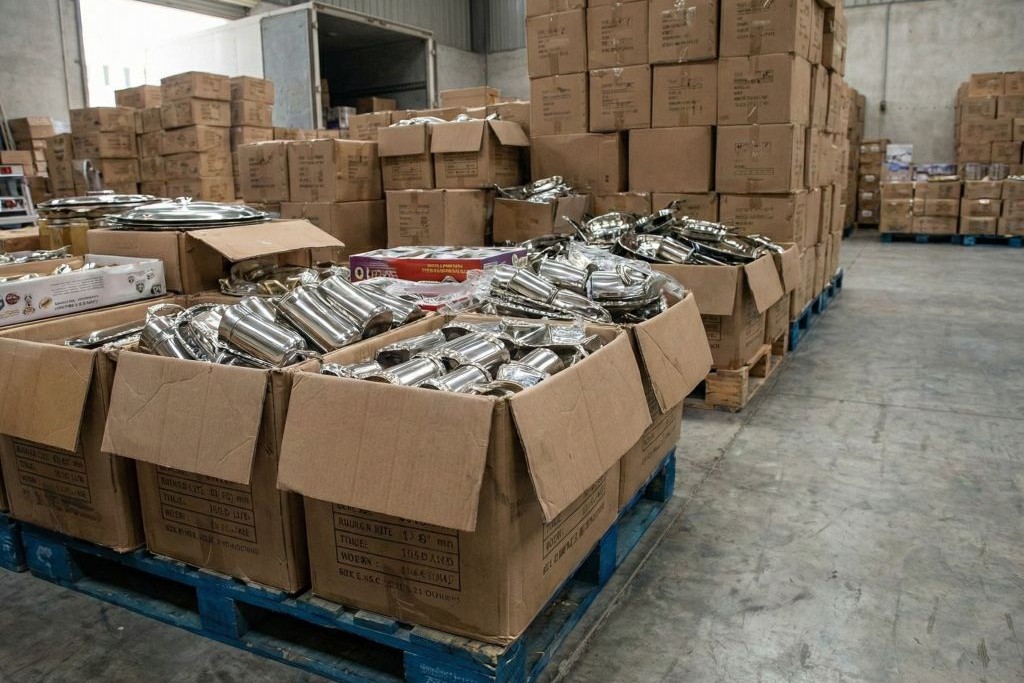
Most wholesalers plan shipments 6 to 10 weeks in advance. This allows time for manufacturing, quality checks, shipping, and customs clearance.
For buyers in UAE and Kuwait, sea freight is commonly used for large volumes. For African destinations, consolidated shipments and regional ports help manage costs.
Quality Standards to Look For
When buying in bulk, wholesalers should focus on:
- Food grade stainless steel (202 or 304)
- Uniform thickness and finish
- Smooth edges for safety
- Proper packaging to avoid damage
Poor quality products can lead to customer complaints, returns, and brand damage during the busiest sales season of the year.
Why Raj Metal Industries Is a Trusted Export Source
Raj Metal Industries has been manufacturing stainless steel kitchenware and tableware for decades. Their product range covers the full spectrum of Ramadan requirements, from glasses and mugs to tiffins, canisters, and baltis.
They export to markets including UAE, Kuwait, Yemen, Africa, Sri Lanka, and other regions. Their experience with international buyers allows them to meet bulk order requirements, packaging standards, and shipping timelines needed for Ramadan season.
Conclusion
Wholesale demand for stainless steel utensils rises sharply during Ramadan in UAE, Kuwait, and Africa. Importers and distributors who prepare early gain a strong advantage in serving caterers, mosques, and NGOs during this peak season.
By sourcing the right mix of drinkware, food containers, tiffins, and cooking vessels, wholesalers can meet market demand efficiently while ensuring quality and hygiene. Stainless steel remains the most reliable and cost effective choice for Ramadan food service across global markets.