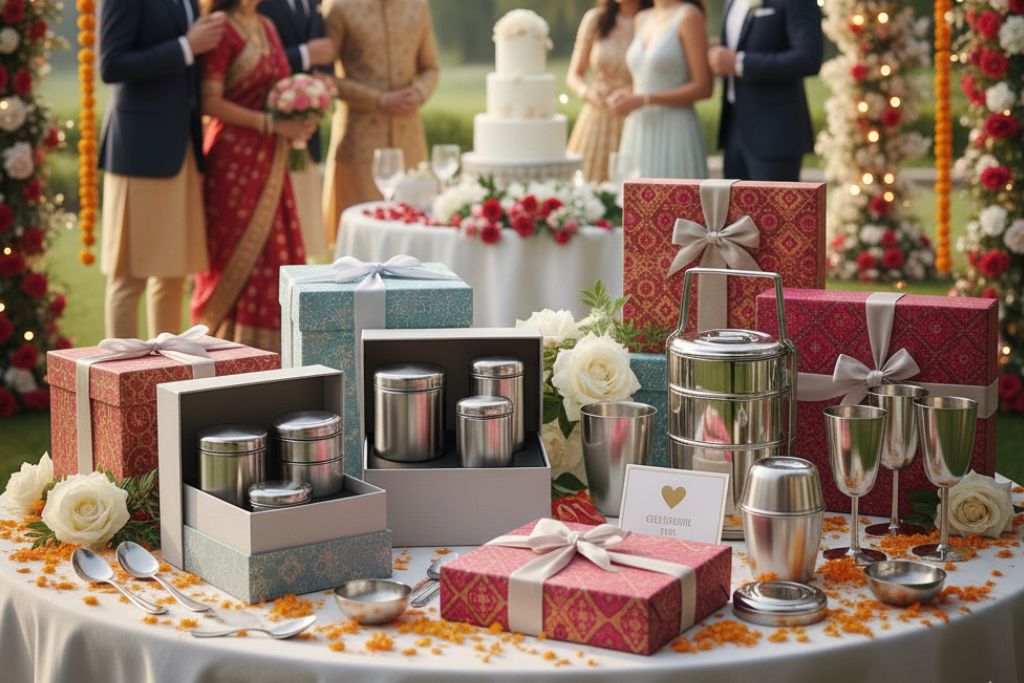
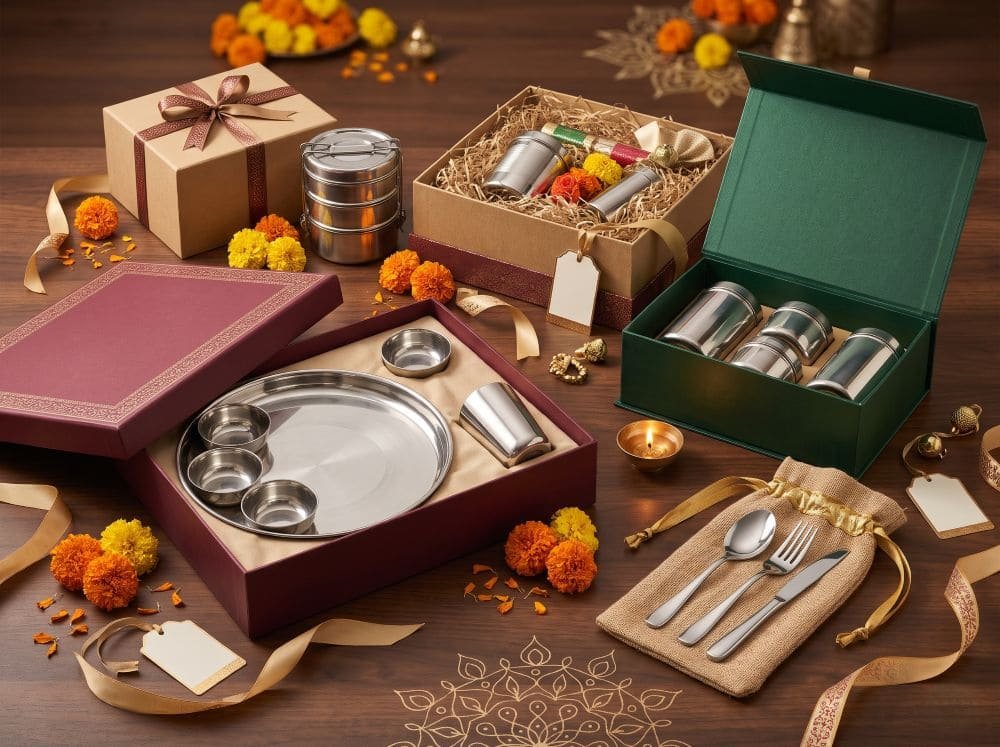
Most people can recall the moment a gift was handed to them better than the gift itself. The weight of the box, the sound of the lid, the paper inside and the way the item sat in its place all shape the first few seconds, and those seconds colour what the recipient thinks of the sender. In Diwali gifting, where dozens of similar parcels arrive within a few days, presentation is often the difference between a gift that is remembered and one that is forgotten.
This matters particularly for utility items. A well-made steel product is practical and long-lasting, but the recipient meets the packaging first. A considered box tells them that the sender has thought about the exchange, while a careless one can undermine the value of the contents. For businesses choosing stainless steel corporate gifts, packaging deserves a place in the plan from the beginning.
This guide looks at how presentation influences a gift, which packaging styles and materials suit stainless steel, how festive design can be handled with taste, how to protect polished items in transit, and how to plan packaging costs and timelines.
Stainless Steel Product Categories and the Packaging That Suits Them
Different products call for different packaging. A heavy dinner set needs a strong rigid box, while a spoon set is better served by a slim drawer box or pouch. Matching the pack to the product avoids both over-packaging and under-protection.
The pairings below are common starting points that can be adapted to a brand’s look and budget.
Dabbas and Canisters
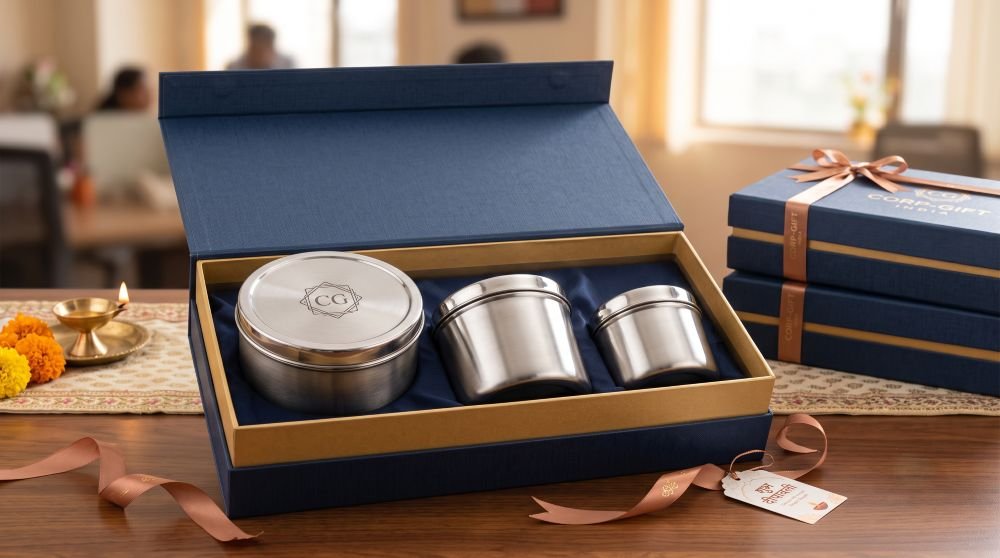
Stainless steel dabbas and canisters suit kraft boxes with a paper insert, or a cloth pouch for a lighter and more reusable pack. A set of several sizes looks well in a single rigid box with nested compartments.
A set of dabbas looks well when the pieces are nested or lined up by size, so the insert should hold each piece in place. A cloth pouch for a single canister offers a lighter alternative that the recipient can reuse.
Tiffin Boxes
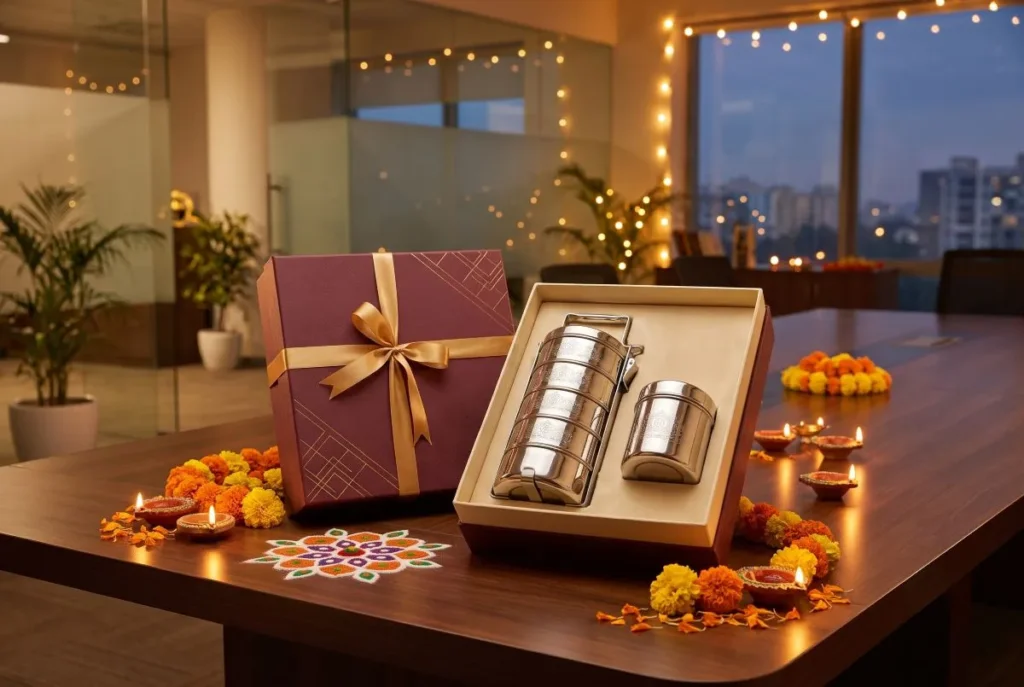
Stainless Steel Tiffins suit a sturdy carton with a handle or a fabric bag, which makes them easy to carry and reuse. A small card inside can carry care instructions.
A tiffin’s tiers and clips can rattle in transit, so each part should be wrapped separately or held by a fitted insert. A small card tucked under the lid with care instructions adds a practical touch.
Thali Sets and Trays
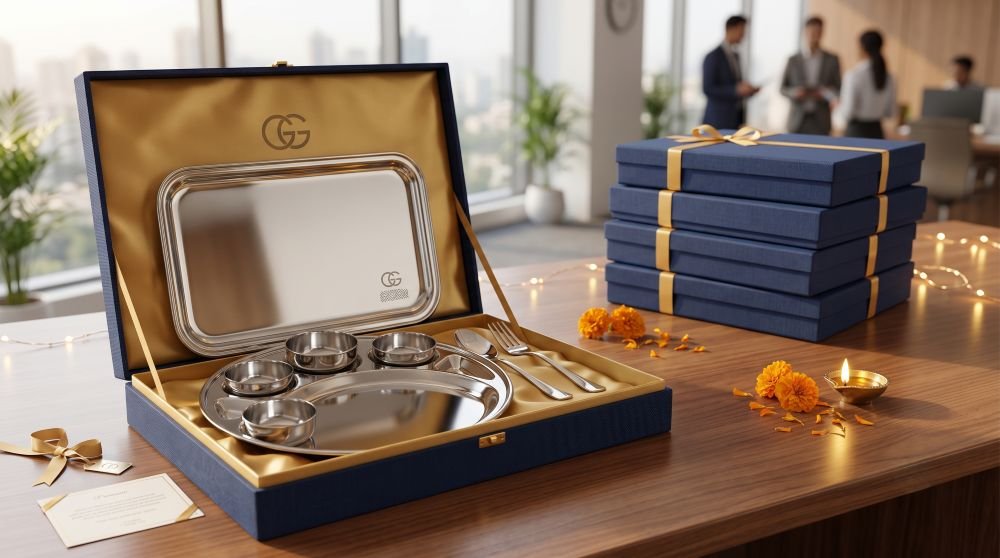
A stainless steel thali and tray set suits a rigid box with a shaped insert, so each katori and plate is held securely and displayed neatly on opening.
Thali sets have several parts of different shapes, so the insert should be cut to hold each one. When the box is opened, the thali, katoris and spoon should appear in an arrangement that looks complete at a glance.
Spoons and Cutlery Sets
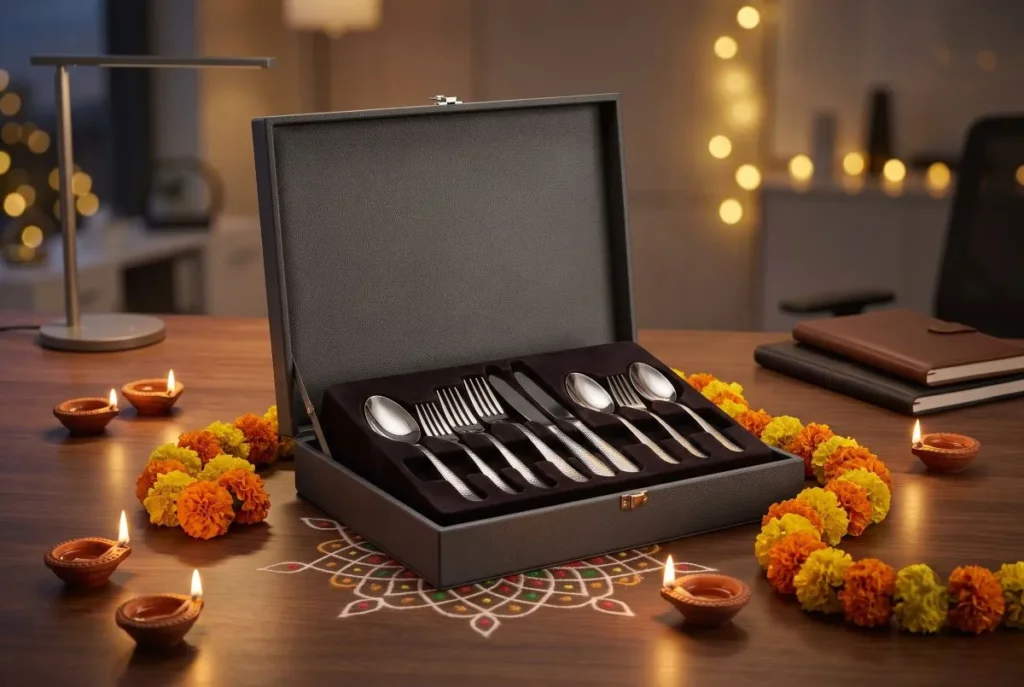
A set of stainless steel spoons and cutlery works well in a slim drawer box, a magnetic box or a cloth roll, which gives a refined look at low weight.
Because spoons are narrow, they are prone to bending or scratching if loose. A fitted slot for each piece, or a soft cloth roll with a pocket for each, keeps them separate and displays them neatly.
Dinner Sets and Bowls
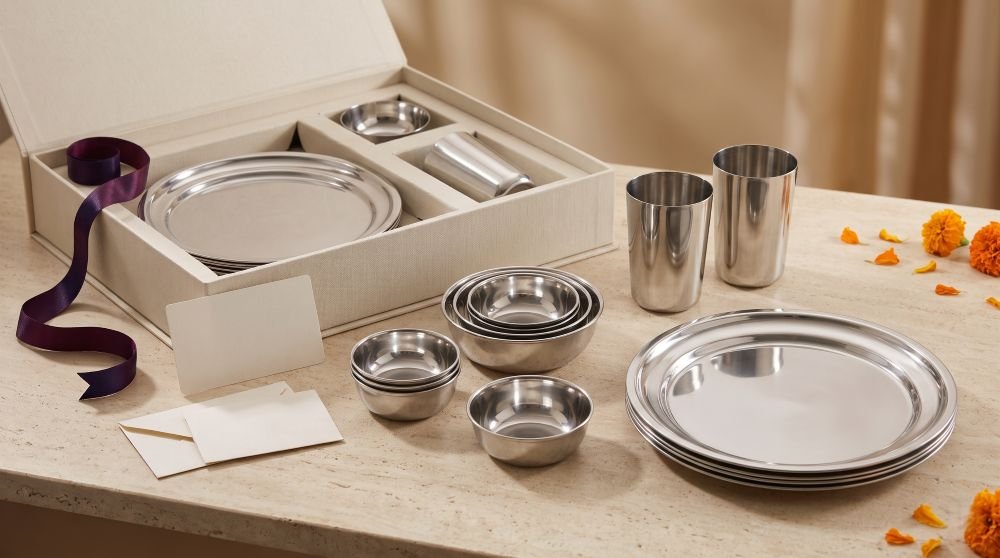
Larger sets from a stainless steel tableware range need a heavy-duty rigid box or a two-piece lid-and-base carton with dividers to prevent contact.
A dinner set is heavy, so the box should use thick board and separate compartments so that plates and bowls never touch. A sturdy outer carton is essential, since a single drop can damage an entire set.
Kitchen Essentials
Items from stainless steel kitchenware can be combined into a hamper-style box with a shared insert, which suits recipients who cook regularly.
Hamper-style packaging allows several items to travel together, but it works only when each item has its own place. A shared insert with clear divisions prevents scratches and makes the contents easy to remove.
Why Presentation Shapes How a Gift Is Received
A gift is received in stages. The recipient first sees the outer carton or bag, then the inner box, then the item and finally any card or note. Each stage either builds anticipation or lets it down. A tidy sequence, with materials that feel solid and an arrangement that looks intentional, builds the sense that the gift was chosen with care.
Diwali adds its own context. Gifts are often opened at home with the family, displayed on a table, or offered onward to relatives and guests. Packaging that looks good in those settings, and that can be reused for storage or passed on, extends the life of the gesture beyond the moment of opening.
Packaging Styles for Stainless Steel Gifts
Stainless steel is heavy, hard and often polished, so packaging must support its weight and protect its finish. The right style depends on the type of item, the number of pieces and the tone the sender wants to set.
Four styles are used most often in corporate gifting, and each has a different character.
Rigid Boxes With Fitted Inserts
A rigid box is made from thick board and holds its shape, which gives it a substantial feel. When paired with an insert cut to the shape of the product, it presents each piece neatly and keeps it from moving in transit. This style suits thali sets, multi-piece collections and dinner sets.
Rigid boxes cost more than simple cartons and take longer to make, so they are usually reserved for the upper budget tiers and for key clients. The investment is generally visible, and recipients often keep the box for storage.
Drawer and Magnetic Closure Boxes
Drawer boxes slide open to reveal the contents, and magnetic closure boxes snap shut with a satisfying sound. Both offer a sense of occasion and work well for compact items such as spoon sets, small dabbas or a pairing of a canister with a note card.
Their relatively refined look makes them suitable for client and partner gifts. They suit items of limited size and weight, since a magnetic lid can strain under a heavy load.
Kraft and Corrugated Boxes
Kraft paper and corrugated board give a natural, understated look and offer good protection at moderate cost. They suit large employee gifting programmes where thousands of units must be packed, and they can be printed with a one-colour logo for a clean appearance.
This style fits well with sustainability goals, since plain board is widely recyclable. To keep the box from feeling plain, it can be paired with a coloured ribbon, a greeting card or a festive sticker.
Jute, Cotton and Cloth Pouches
Pouches made from jute, cotton or festive fabric are light, flexible and reusable. They suit items such as spoon sets, small canisters and dabbas, and they can be tied with a drawstring and a tag. Recipients often reuse them to store spices, dry fruits or travel items.
Cloth packaging can also be given a festive character through colour and weave, without relying on laminates or plastics. A simple block-printed or embroidered pouch is a way of bringing Indian craft into the gift.
Materials and Finishes
The choice of material determines how the packaging looks, feels and ages. Textured papers, matte laminates and uncoated board give a tactile quality, while foil stamping, embossing and debossing add detail to logos and patterns. Restraint usually works better than decoration, and one well-executed finish can look more refined than several competing ones.
Sustainability is a consideration as well. Paper from certified sources, water-based inks and the avoidance of plastic windows and foam inserts all reduce the environmental cost of the box. These choices can also be mentioned in the accompanying card, as long as the claims are accurate.
Colour and texture should be tested in real light. Shades that look rich on a screen can turn dull on board, and foil effects vary with the angle of light. Reviewing physical samples under both daylight and indoor light, and in the hands of people who resemble the intended recipients, reduces surprises after production.
Festive Design Elements That Feel Right for Diwali
Diwali has a rich visual vocabulary, from diyas and rangoli to marigold, gold and deep jewel colours. Maroon, deep green, saffron and gold are common choices, and they look natural on steel because they complement its cool tone. A small motif such as a diya, a lotus or a rangoli border is usually enough.
Restraint also applies to religious imagery. Images of deities may be welcome to some recipients but not to others, particularly where the list includes clients of other faiths or overseas partners. Geometric patterns, floral designs and abstract light motifs keep the festive spirit without making assumptions.
Protecting Steel Gifts in Transit
Polished stainless steel can pick up scratches, scuffs and fingerprints, and a mirror finish shows every mark. Soft tissue, cloth or a lint-free wrap around each piece prevents abrasion, and fitted inserts stop pieces from touching one another. The inner box should be sized to avoid movement without forcing the items in tightly.
The outer layer matters equally. A corrugated shipping carton with adequate cushioning protects against drops and compression, and gifts travelling long distances should be tested before the full run is packed. Moisture can leave marks on steel, so inner wrapping should be dry and the carton sealed against damp conditions.
Designing the Unboxing Sequence
The moments after the lid is lifted deserve deliberate design. A layered sequence, with a card on top, a layer of tissue, and then the product in a fitted tray, builds anticipation and gives the recipient a clear path through the box. Placing the most important item where the eye lands first prevents the contents from looking jumbled.
Small cues add to the effect: a ribbon that releases easily, a lid that opens smoothly, and tissue that folds back without tearing. These details cost little but are noticed, and they separate packaging that was merely assembled from packaging that was designed. Testing the sequence with several people before production quickly reveals any awkward steps.
Personalisation and Inserts
Personal touches turn a standard pack into a specific gift. A printed or handwritten card, the recipient’s name on the box, or a small logo placed on the base of the product all add meaning without clutter. Handwritten notes are especially valued for senior clients and long-standing partners.
Inserts can also be useful. A short care card explaining how to wash and dry the item, or a note about the steel grade and finish, helps the recipient look after the product. Such information should be brief, accurate and free of promotional claims.
Planning, Costing and Lead Times
Custom packaging takes time. Design, sampling, approval, production, printing and assembly can take several weeks, and delays in any step affect the entire timeline. Asking for a physical sample before approving a large run is the surest way to avoid disappointment.
Cost depends on size, material, print method, finish and quantity, and minimum order quantities for custom boxes can be significant. For large programmes, combining a standard box with a custom sleeve or sticker is a cost-effective way to get a personalised look. Storage and assembly space also need to be planned, since hundreds of boxes can occupy more room than expected.
Conclusion
Presentation changes how a gift is experienced. Packaging is the first thing a recipient touches, and it frames the product inside. For stainless steel items, which are valued for their practicality, thoughtful packaging adds the sense of occasion that a Diwali gift deserves.
The most effective choices tend to be simple: a box that fits the product, materials that feel solid, a restrained festive design, careful protection and a short personal note. Each of these is within reach of most budgets, and together they create a coherent and memorable impression.
Early planning, physical samples and a clear understanding of costs keep the project on track. A gift that is well packed, well protected and well timed will usually be appreciated for what it is, and the box will often be kept long after the festival is over.