
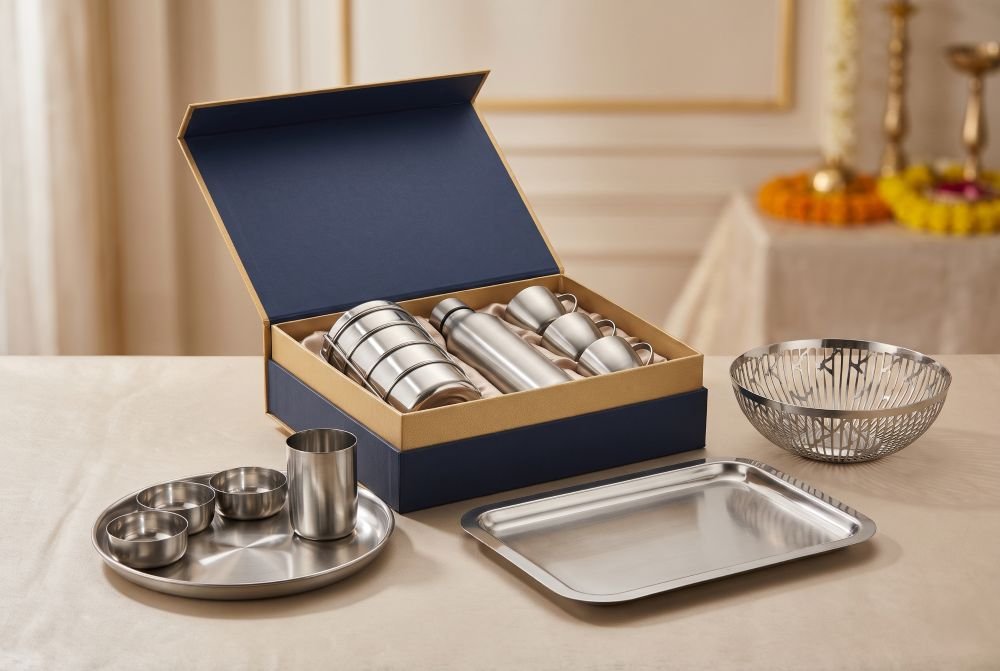
Ordering a stainless steel gift for a team sounds simple until the options start multiplying. A thali on its own looks incomplete, a thali with four katoris and a glass looks generous but doubles the cost, and somewhere between a single tumbler and a full dinner set lies the combination that actually suits the budget, the recipients and the occasion.
That middle ground is where most corporate gifting decisions are made. A well-chosen combination feels complete, is used regularly at home and carries the company’s name into the recipient’s kitchen for years. A poorly chosen one either looks thin or includes pieces that end up at the back of a cupboard.
This guide sets out the combinations that work best for corporate gifting in India, then explains how to choose between them based on the recipient, the occasion, the budget and practical factors like packaging and branding.
Best Stainless Steel Gift Set Combinations for Corporate Gifting
The combinations below are built around how Indian households actually use steel at home. Each can be scaled up or down by changing the number of pieces or the size of the main item.
A useful test for any combination is whether every piece in it would be used in the same room of the house. Sets that belong together, such as a thali with its katoris or a tiffin with its bottle, feel complete. Sets that mix unrelated items tend to feel like leftover stock packed into one box.
The Dining Set: Thali, Katori, Glass and Spoon
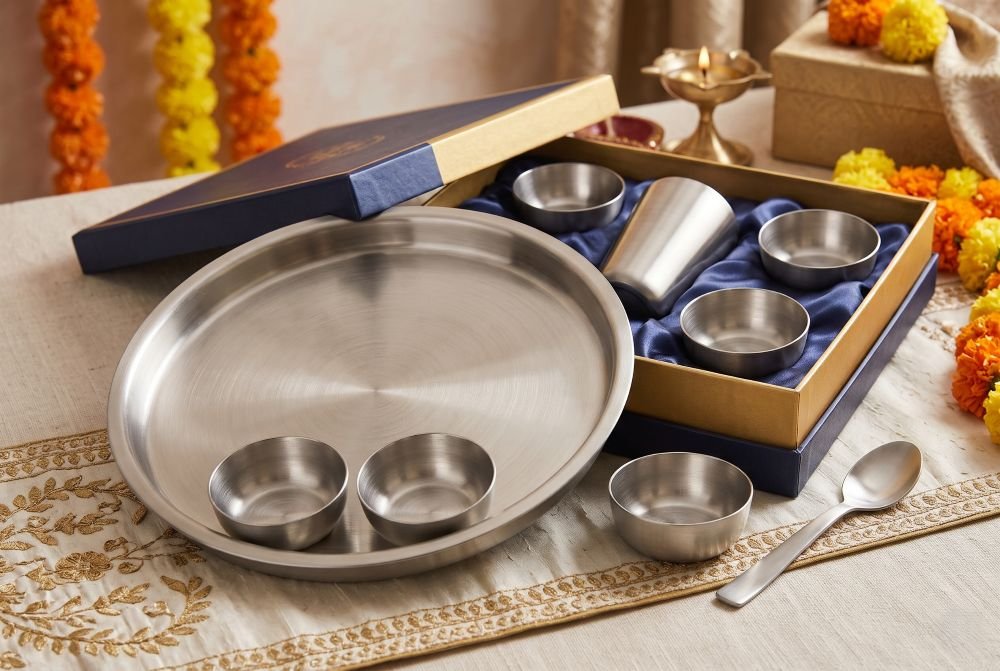
A complete single-person dining set is the most traditional steel gift combination in India. It typically includes a thali, two or three katoris, a glass and a spoon, and it feels complete in a way that a single plate never does.
For larger budgets, the same combination scales into a two-person or four-person family set. Stainless steel thali and tray sets can be chosen in plain, hammered or laser-etched designs, so the same structure can be adapted for a factory workforce or a senior leadership team.
The Kitchen Storage Set: Nested Dabbas
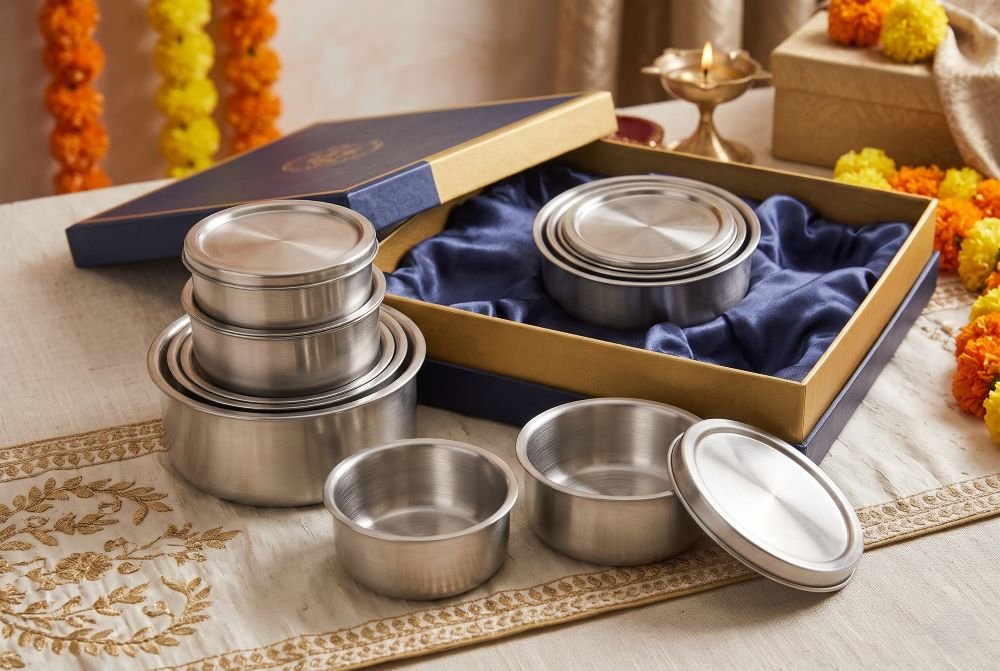
A set of three, five or seven nested dabbas solves a daily problem in every kitchen. Because the containers fit inside one another, the set looks generous but packs into the space of its largest piece, which keeps shipping costs low.
Stainless steel dabbas and canisters with airtight lids are especially useful in humid regions, and a masala dabba with seven small bowls inside is a popular variation for recipients who cook regularly.
The Tea and Coffee Set: Cups and Mugs
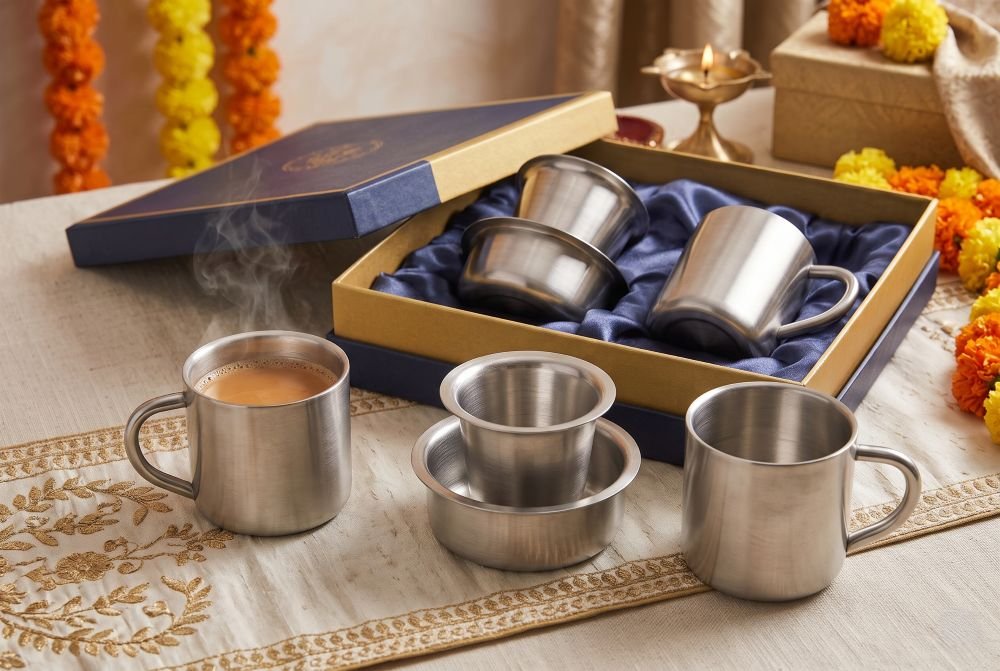
Pairing two or four cups or mugs creates a set that suits both office desks and homes. Steel tumbler and davara sets also work well for teams in South India, where filter coffee is part of the daily routine.
Stainless steel cups and mugs can be combined with a pack of tea leaves or coffee powder to create a gift with an edible element. Double-wall mugs cost a little more but keep drinks warm longer, which recipients notice.
The Lunch Set: Tiffin with an Insulated Bottle
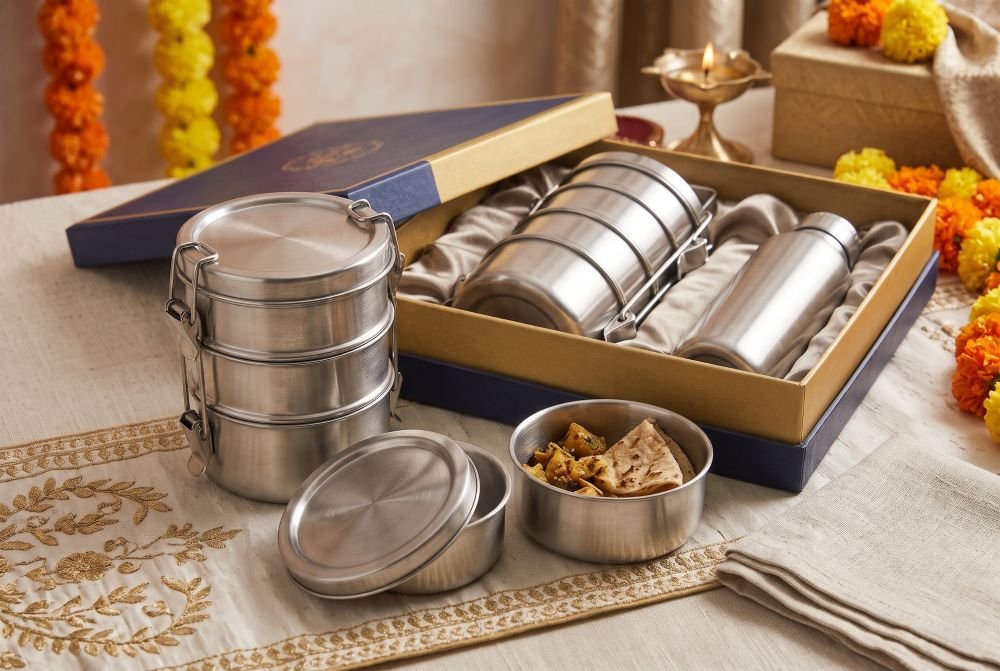
A tiffin box with a matching insulated water bottle is a strong combination for teams that commute and carry lunch. It speaks directly to the recipient’s working day rather than to the festive table.
Many companies source the tiffin from a utensil manufacturer and add a vacuum-insulated bottle from a separate drinkware supplier. The bottle keeps water cold through a long day in hot cities, and the combination reads as a thoughtful workday kit rather than a generic present.
The Serving Set: Fruit Basket and Tray
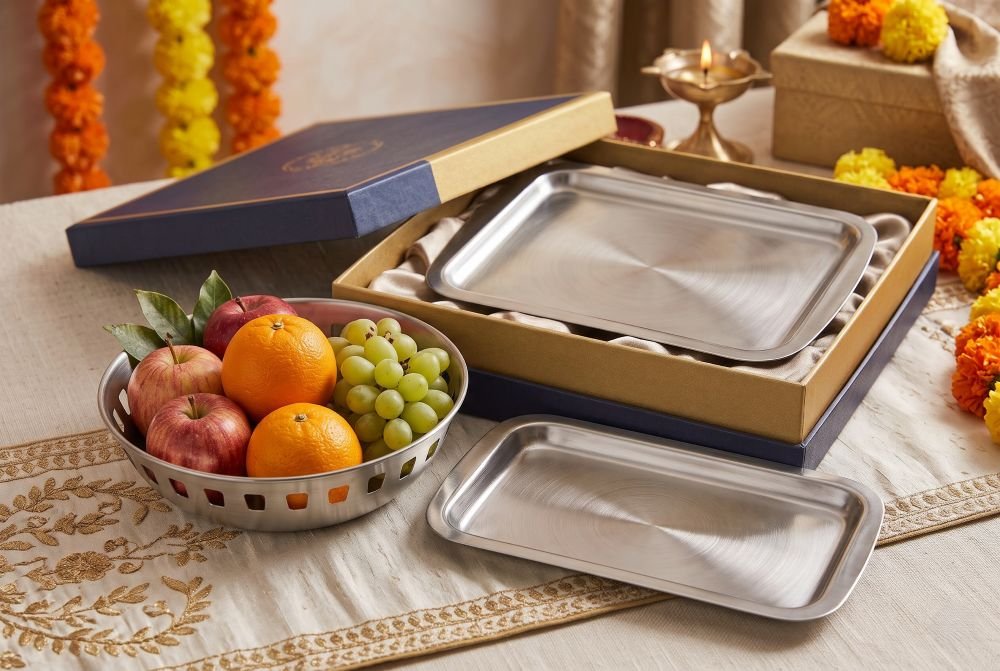
A fruit basket paired with a serving tray suits gifts meant for the home rather than for personal use. Both pieces are on display, which gives them more visual presence than storage items kept in a cupboard.
A stainless steel fruit basket can be filled with dry fruits or seasonal fruit for festive occasions, so the combination works for Diwali, housewarming-style client gifts and New Year greetings alike.
The Bath Set: Balti and Mug
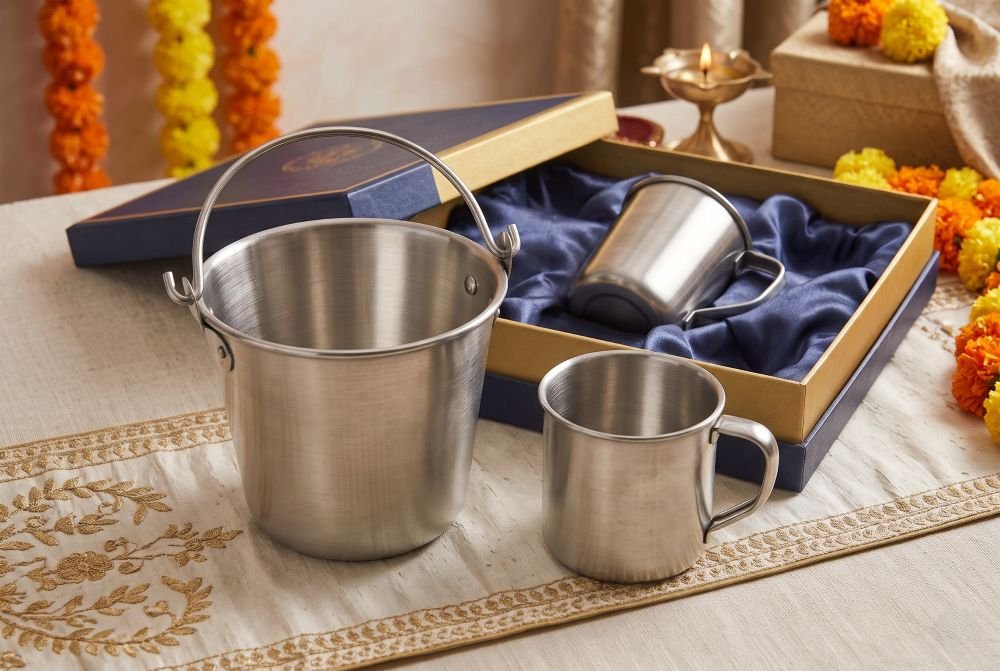
A steel balti with a matching mug is a classic Indian household gift, still common at weddings and griha pravesh ceremonies. For corporate gifting, it suits factory, field and site workforces where practical gifts are valued more than decorative ones.
Stainless steel baltis also last far longer than plastic buckets, which crack in a year or two. Choose a capacity that fits a standard bathroom, usually between 10 and 20 litres, and ask for a matching mug in the same finish.
The Steel and Copper Water Set
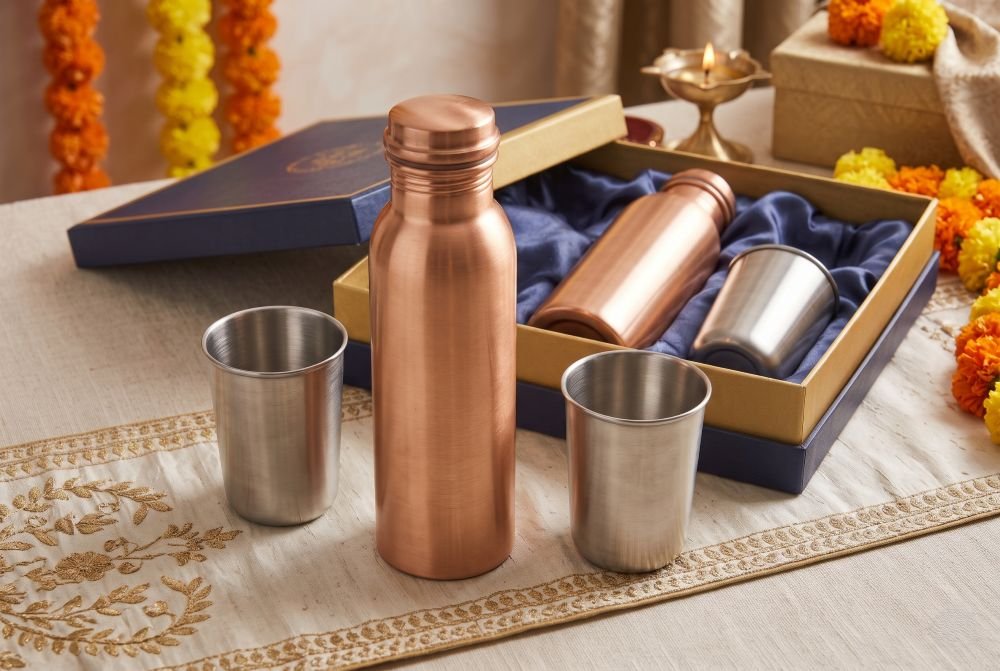
Copper bottles and tumblers have a strong following among people who prefer to store drinking water in copper overnight, a traditional practice in many Indian households. A copper bottle paired with two steel glasses mixes the two metals in one gift.
Copper requires more care than steel, since it tarnishes and should not be used for acidic drinks. This combination works best for recipients known to appreciate copper, rather than as a default for an entire workforce.
Steel Sets with Dry Fruits or Sweets
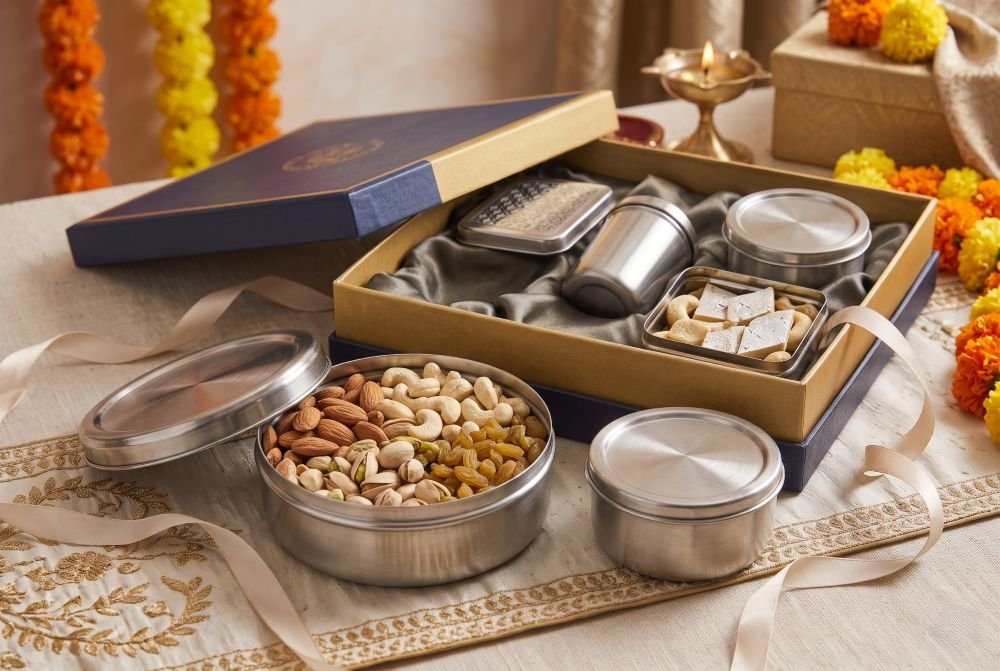
Placing a small edible gift inside a steel container is one of the simplest ways to make a set feel festive. Dry fruits inside a dabba, sweets inside a tiffin, or tea inside a canister all turn a functional item into a celebratory one.
The edible portion is usually sourced separately from a dry fruit or sweets supplier. Choose items with a shelf life of several weeks so that gifts can be packed in advance without spoilage.
Choosing the Right Combination for Your Recipients
The best combination depends on who is receiving it. A gift that delights a family-oriented employee in Pune may mean little to a young professional living alone in Bengaluru, and a set that works for a factory workforce may look too modest for a key client.
Start by grouping recipients into a few categories, such as employees by level, clients by relationship value, and channel partners by business size. Then choose a combination that suits each group’s likely lifestyle and use.
Gifts for Employees
Employees value gifts they will use at home and at work. Lunch sets, dabba sets and dining sets all score well because they replace items that wear out or that people would otherwise buy themselves.
For mixed teams, avoid combinations that assume a particular household size. A two-person dining set or a three-piece dabba set suits both single and family households better than a large four-person set.
Gifts for Clients and Partners
Clients and partners usually receive gifts on the company’s behalf, so presentation and perceived value matter more. Serving sets, fruit baskets and family dining sets are visible at home and are associated with hospitality.
For distributors and dealers who run shops or warehouses, practical sets that can be used at their premises are often appreciated. Our article on why stainless steel utensil sets make good bulk corporate gifts covers this in more detail.
Matching the Combination to Your Budget
The same combination can be built at very different price points by changing the size, thickness, finish and number of pieces. This flexibility is one of the main advantages of steel gift sets for corporate buyers.
A useful rule is to cut the number of pieces before cutting the quality of each piece. A three-piece set made from heavier sheet looks and feels better than a seven-piece set made from thin steel that dents in transit.
Weight and Thickness
Weight is one of the clearest signals of quality to a recipient. A heavier thali or dabba feels more substantial in hand and is less likely to dent during courier delivery.
When comparing quotes, ask for the weight of each piece and the finished thickness in millimetres. Two sets that look identical in photographs can differ significantly in weight, and therefore in how long they last.
Grade
Most household steel gifts in India are made from Grade 202, which performs well for everyday use and keeps costs reasonable. Grade 304 offers better corrosion resistance and is worth choosing for higher-value gifts, for recipients in coastal cities or for items like water bottles that stay wet for long periods.
If the gift set will be marketed to recipients as 304, ask the supplier to confirm it in writing. Grade substitution is a known problem in the steel utensil market, and confirming the grade on the invoice protects the company.
Packaging and Branding the Set
The way a set is packed determines its first impression. A combination arriving in a well-fitted box with internal separators looks deliberate, while the same pieces loose in a carton look like stock.
For corporate orders, rigid boxes, magnetic-closure boxes and printed sleeves are common choices. Each piece should sit in a dedicated slot or be wrapped individually so it does not scratch the others during transport.
Logo Placement
Laser engraving is the most durable way to brand steel, because the mark is etched into the surface and does not wear off with washing. Place logos where they are visible but discreet, such as near the base of a glass, on the lid of a dabba or on the rim of a thali.
Avoid large logos in the centre of plates or on serving surfaces. Recipients are more likely to use, and display, a gift where the branding is understated.
Personalisation
Adding the recipient’s name, or a short message, raises the perceived value of the gift considerably. It also extends the lead time, because each piece has to be engraved individually and checked.
For large orders, a practical compromise is to engrave the logo on the product and personalise only the greeting card. This keeps production fast while still making each gift feel addressed to its recipient. For bulk orders with branding, the stainless steel corporate gifts page outlines common options.
Conclusion
Choosing a stainless steel gift set for corporate gifting is mostly a matter of matching the combination to how recipients live. Dining sets, storage dabbas, tea sets, lunch kits, serving sets and bath sets each suit a different kind of recipient and occasion.
Group recipients first, then choose a combination for each group. Protect the budget by reducing the number of pieces rather than the thickness of each piece, confirm grade and weight in writing, and invest in packaging that keeps the set intact through delivery. Finally, keep branding understated and durable. A discreet engraved logo on a set that gets used every day will keep the company in mind far longer than a large printed one on a gift that stays in its box.