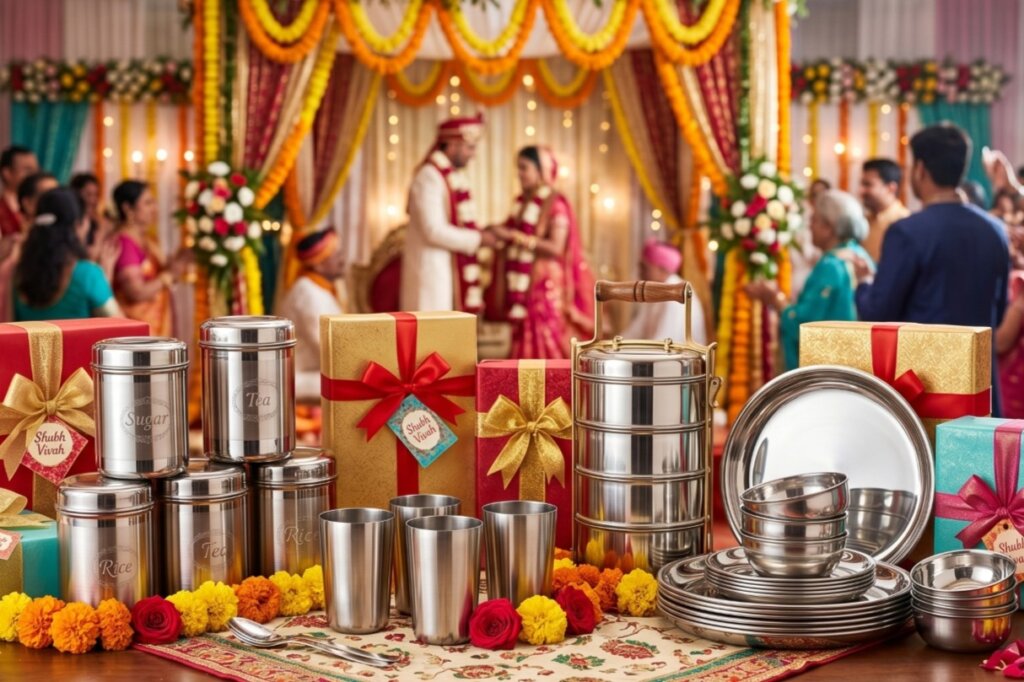

Sustainable Corporate Diwali Gifts: Reusable Ideas for Businesses
Every Diwali, the weeks before the festival produce a familiar pile of waste: cellophane-wrapped hampers, plastic trays, shiny boxes that are opened once and discarded, and decorative items that never find a place in the recipient’s home. For businesses that have set sustainability targets, this seasonal habit sits awkwardly beside their stated commitments. Companies under growing pressure from investors, customers and regulators, including the business responsibility reporting expected of large listed Indian firms, are looking again at what they give. The most credible answer is a gift that people keep and use for years, and options such as reusable stainless steel corporate gifts fit that description better than most festive items. This article explains what makes a corporate gift genuinely sustainable, how to avoid the traps of vague environmental claims, which reusable categories suit Diwali gifting, and how to plan packaging and reporting so that the gesture holds up to scrutiny. Stainless Steel Gift Ideas for Sustainable Diwali Corporate Gifting Stainless steel offers a wide range of reusable gifts, and most of them are items that Indian households already use daily. That familiarity is an advantage, because the recipient knows exactly what to do with the gift. The categories below are those most often chosen by businesses that want gifts to be both useful and long-lived. Stainless Steel Dabbas and Canisters Stainless steel dabbas and canisters replace plastic storage containers in the kitchen, and a set in graduated sizes can hold grains, spices, tea or dry fruits for decades. A steel dabba set can replace several plastic containers over its life, so each recipient who switches carries the benefit for years. Plain designs without paint or printed coatings also keep the item simple to recycle at the end of its service. Stainless Steel Tiffin Boxes Stainless Steel Tiffins give employees a reusable alternative to disposable lunch packaging, which makes them a direct and visible way to cut single-use waste. Employees who bring lunch from home use a tiffin nearly every working day, which makes this one of the most visible reuse gifts. A company can reinforce the gesture by pairing it with a simple internal message about cutting disposable lunch packaging. Thali Sets and Trays A stainless steel thali and tray set is a traditional reusable dining set that suits festive meals and everyday use, and it replaces disposable plates at gatherings. Reusable thali sets are well suited to festive gatherings, where disposable plates and cups are otherwise common. A household that keeps a set for guests can avoid hundreds of single-use items over the years. Spoons and Cutlery Stainless steel spoons and cutlery work as reusable alternatives to plastic cutlery, and a compact set is easy to carry to work or on journeys. Carrying a personal spoon set to work or while travelling removes the need for plastic cutlery at the canteen or on the road. The set is small and light, which makes it easy for recipients to adopt the habit. Tableware Sets Bowls, plates and serving pieces from a stainless steel tableware range suit longer-term gifts for clients and partners who host guests regularly. Clients and partners who host regularly will use tableware often, so the item’s lifespan is long. Choosing a timeless, unbranded design keeps the set in use even if tastes change. Kitchen Essentials Practical items from stainless steel kitchenware give households everyday tools that are built to last for many years. Simple designs with no coatings or detachable decorative parts are easy to maintain, and they remain recyclable when the item finally reaches the end of its life. Items that last for decades also reduce the waste that comes with replacements. What Makes a Corporate Gift Sustainable Sustainability in gifting is easy to claim and harder to demonstrate. A gift is not sustainable simply because it uses a natural material or carries a green leaf on its label. The better test is whether the item will still be in use years from now, and whether the resources used to make, pack and deliver it are justified by that long life. Three factors do most of the work: how long the gift lasts, what happens to the material at the end of its life, and how far it has travelled to reach the recipient. Each is examined below. Durability and Daily Use A gift that is used every day for a decade has a far smaller footprint per use than one used for a week. Stainless steel is hard-wearing, does not shatter, and tolerates daily washing and heat, which is why steel dabbas, thalis and spoons are often handed down within Indian families. The longer an item survives, the more convincing its sustainability case becomes. Durability only counts if the recipient actually uses the item, so usefulness matters as much as strength. A canister that sits in a kitchen cupboard and holds atta or dry fruits every month is a better sustainable gift than an elaborate steel sculpture that ends up in storage. Recyclability at End of Life Stainless steel can be recycled repeatedly without losing its essential properties, and discarded steel utensils have long had a place in India’s scrap and re-melting chain. That is a meaningful advantage over mixed-material gifts, such as items that combine plastic, adhesives and coatings, which are difficult to separate and recycle. Simple, single-material items are generally easier to recycle than composite ones. When comparing gift options, it is worth asking what the item is made from, whether it can be separated into its parts, and whether the packaging is also recyclable or compostable. Local Manufacturing and Shorter Supply Chains Where a gift is made affects its footprint. Items produced in India for Indian recipients avoid long international shipping and support domestic manufacturing hubs such as Mumbai, Rajkot, Ahmedabad and Yamunanagar, which have long histories in utensil production. Shorter supply chains also make it easier to verify materials and working conditions. Bulk orders can be consolidated and dispatched in a small number of shipments, which cuts the emissions