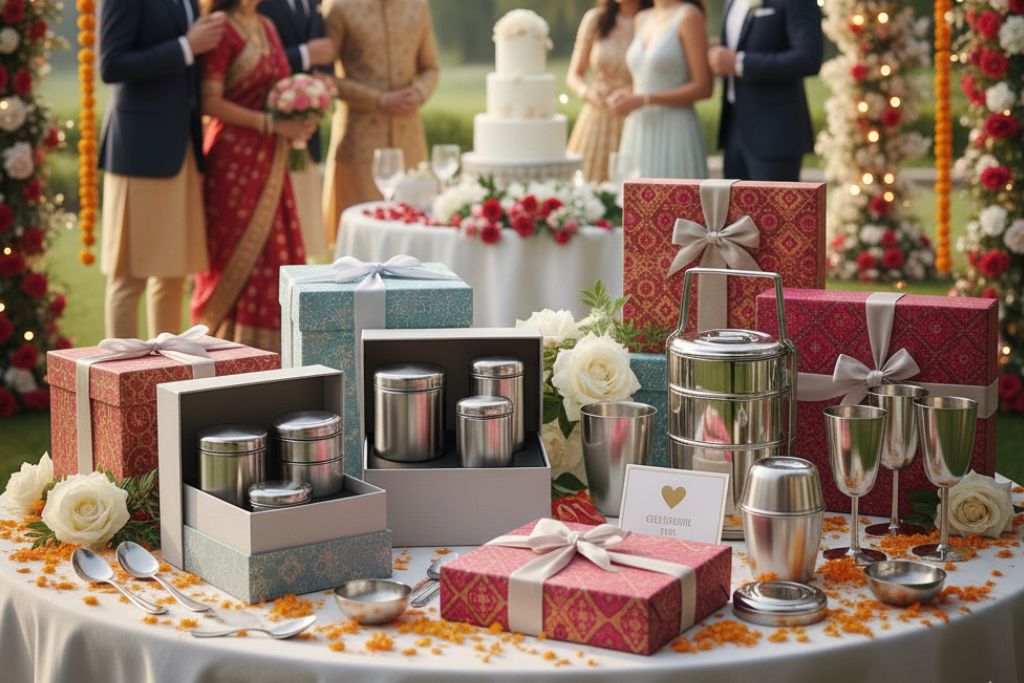
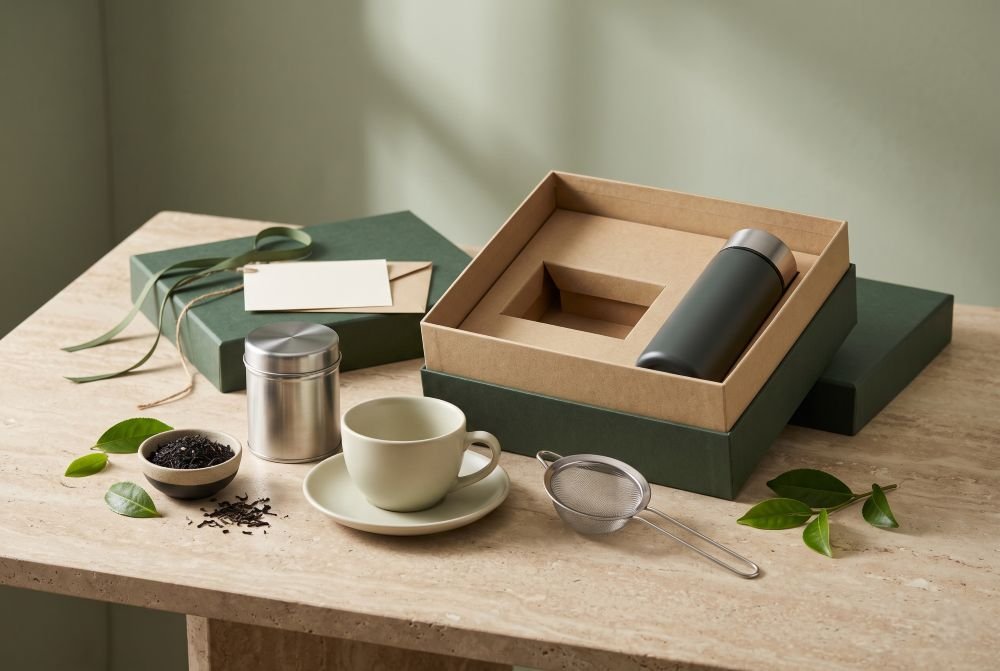
A tea company preparing its festive gift list faces an unusual problem. The people on that list, from estate managers and factory heads to brokers, buyers and blenders, taste dozens of teas every week and receive tea gift boxes from every direction. A handsome box of tea is the obvious choice, and for exactly that reason it is the one most likely to blend into the pile on the recipient’s desk.
The more memorable approach is to give something that supports the ritual of tea instead of competing with the tea itself. Storage, serving and sharing are all part of that ritual, and they are areas where a durable item from a range of stainless steel corporate gifts can be useful long after the festive season has passed.
This article looks at who typically receives gifts in the Indian tea trade, what tea professionals tend to value, which stainless steel product categories suit each audience, and how to plan gifts across the tea calendar without repeating the same box of tea every year.
Stainless Steel Corporate Gift Ideas for Tea Industry
Several stainless steel categories connect naturally to the world of tea. Each one supports an activity that tea professionals already carry out regularly, so a gift from any of them feels relevant instead of random.
The categories below are the ones most often considered when a tea business builds its corporate gifting list.
Stainless Steel Tea Cups
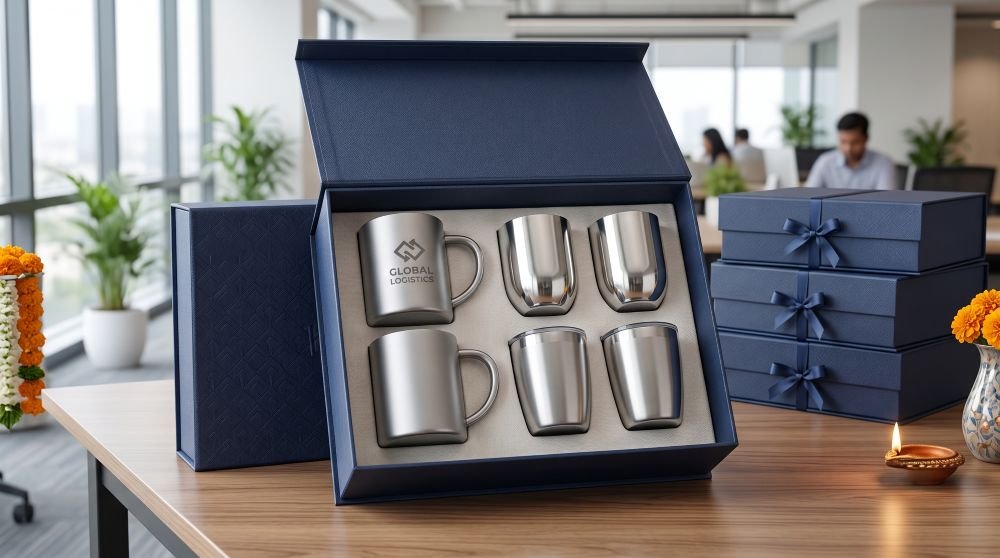
Few objects are used as often in the tea trade as the cup. Tea is tasted, offered to visitors and shared across a table many times a day, in estate bungalows, factory tasting rooms, broker offices and trading houses. A set of stainless steel cups fits into that routine directly.
Steel does not crack or chip, so the cups cope well with busy offices, hill-road transport and frequent washing. They also suit the humid climates of Assam, the Dooars and the Nilgiris, where fragile crockery often goes missing from a gift list for exactly that reason.
For gifting, size and finish matter most. A moderate capacity suits a regular cup of chai, and a smooth rolled rim makes the cup comfortable to drink from. A plain mirror or satin finish looks appropriate on any desk or tray, and a small engraved estate mark or company logo on the base keeps the branding quiet.
A boxed pair or set of four, packed with a canister of loose-leaf tea, makes a complete gift for planters, brokers and buyers who host guests. Because steel conducts heat, it is worth choosing designs with a comfortable handle or a rolled edge, so the cup is easy to hold while the tea is hot.
Tea and Storage Canisters
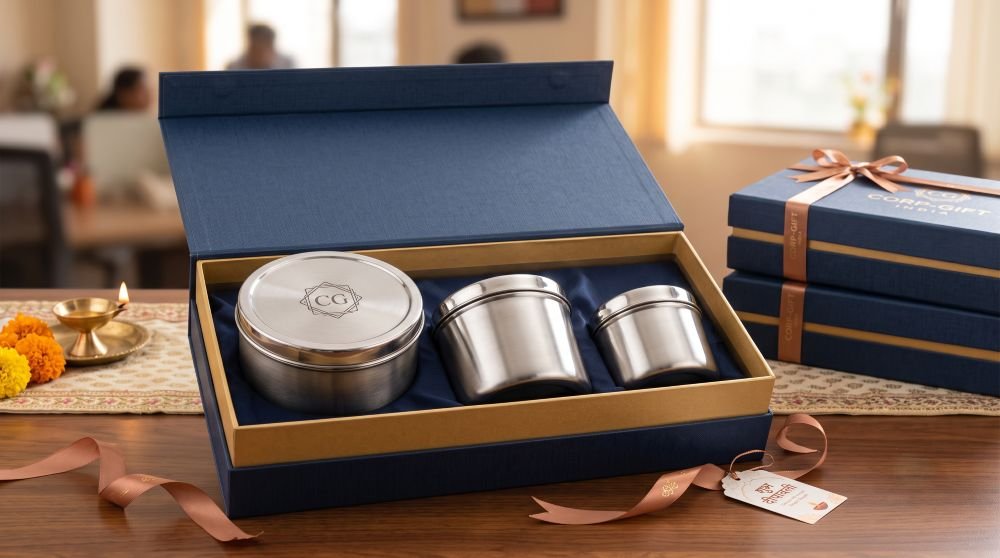
Airtight stainless steel dabbas and canisters are the most direct fit, since they hold loose leaf tea, sugar or biscuits and sit comfortably on any shelf or desk. Graduated sets allow different teas to be kept apart.
Size is worth matching to the recipient. A compact canister suits a desk or a sample shelf, while a larger one suits an estate pantry. Checking that the lid sits flush and that the inside is smooth makes the canister easier to dry and keep free of stale aroma.
Tiffin Boxes
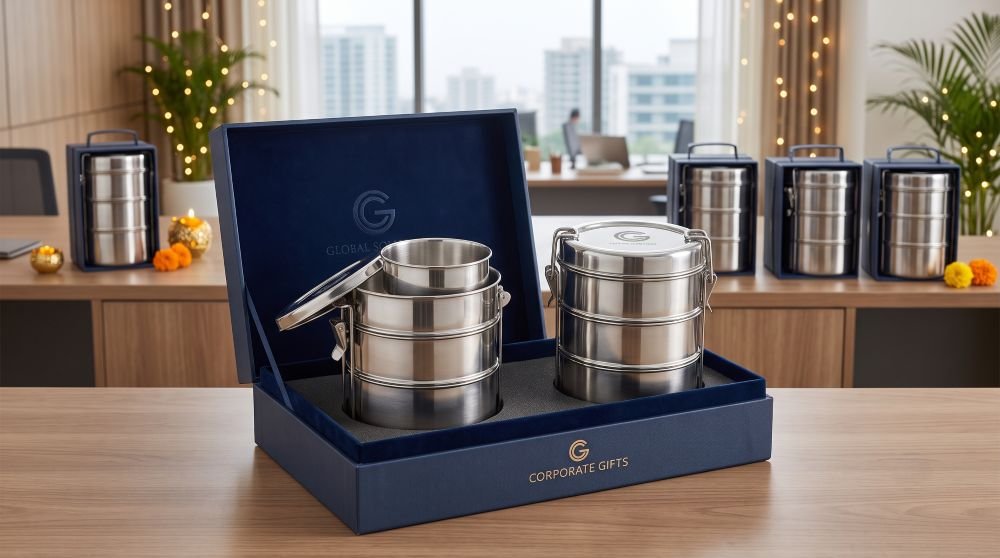
Stainless steel tiffin boxes suit estate staff and field teams who carry meals through the working day. They are durable, easy to clean and widely recognised.
For estate and factory teams, a tiffin makes a gift that is used on working days, which keeps the sender in mind throughout the year. Uniform sizing across the whole team also avoids any suggestion of ranking among colleagues.
Thali Sets and Trays
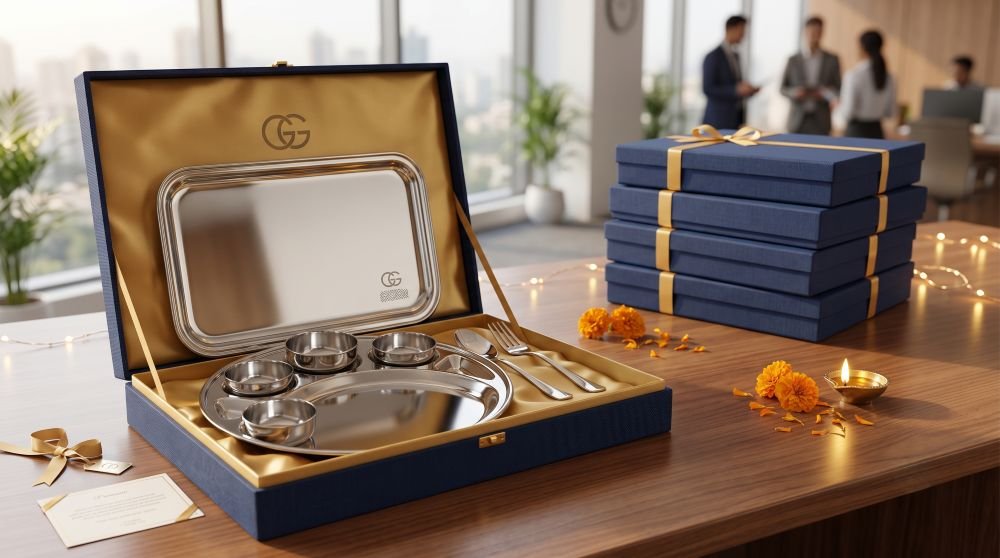
A stainless steel thali and tray set suits hospitality in estate bungalows and office pantries, and it makes a presentable gift for buyers who value Indian dining traditions.
In estate bungalows, hospitality often means serving tea with snacks and meals to visitors at short notice. A tray and thali set that can be washed quickly and stacked neatly suits that rhythm, and it looks appropriate in both a formal and a family setting.
Spoons and Cutlery
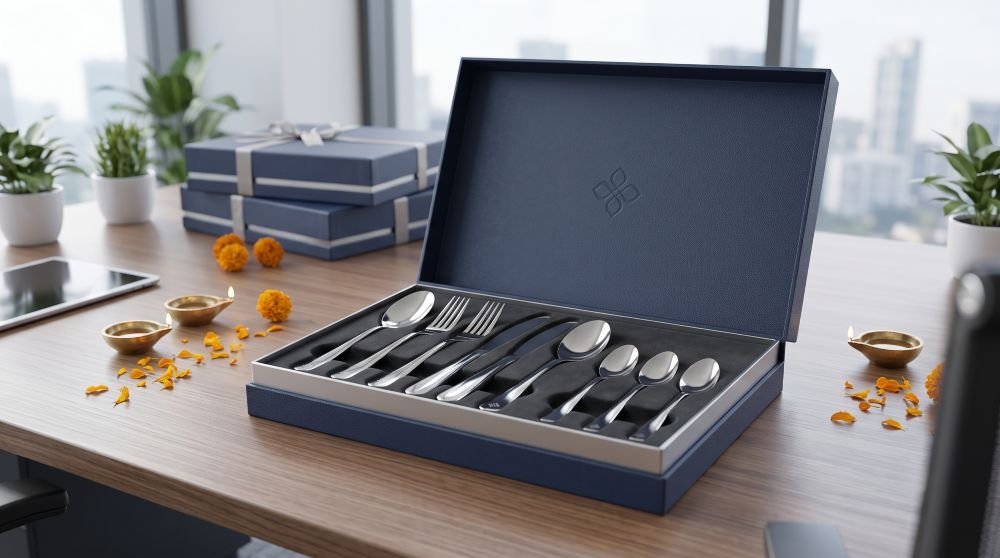
A boxed set of stainless steel spoons and cutlery is a light and affordable gift that pairs well with a canister of tea.
Tea spoons and serving spoons are small enough to include in a gift box alongside a canister of tea. Because they are light, they are easy to dispatch to remote estates without raising shipping costs.
Tableware Sets
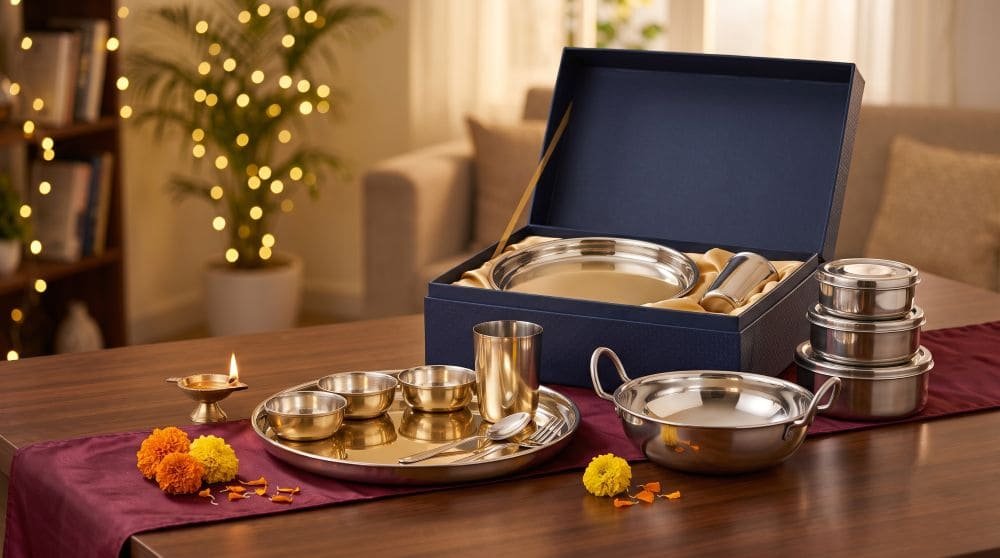
Bowls, plates and serving pieces from a stainless steel tableware range are well suited to senior recipients and long-standing buyers.
Senior buyers and long-standing partners often host guests, so tableware that looks refined on a dining table is well received. A coordinated set with a small engraved mark keeps the sender’s name present in a tasteful way.
Kitchen Essentials
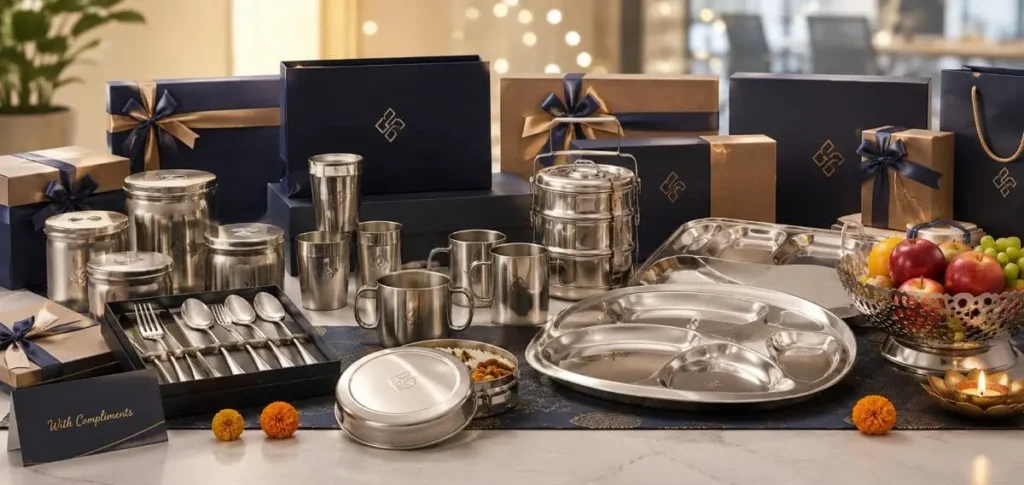
Practical items from stainless steel kitchenware suit recipients who are responsible for office pantries or estate kitchens.
Pantry managers and estate cooks use kitchen items constantly, which makes this category a considerate choice for the people who keep a tea office or bungalow running. Sturdy designs that withstand heavy daily use are the priority.
Who Receives Gifts in the Tea Trade
The tea trade is a long chain, and each link has different expectations. At the start are planters, estate owners and factory managers in regions such as Assam, the Dooars, Darjeeling and the Nilgiris. Next come brokers and auctioneers working at centres such as Guwahati, Kolkata, Siliguri, Coonoor and Kochi, followed by buyers, packers, blenders, exporters and the retail and hospitality customers who finally put tea in front of the consumer.
Gifting across this chain usually serves two purposes. One is appreciation for a season of good business, and the other is the maintenance of relationships that depend on trust and repeated dealings. A gift list built around these roles allows a company to match the style of the gift to each recipient, instead of sending one identical item to everyone from a garden manager to an overseas buyer.
Why Another Box of Tea Rarely Stands Out
Tea professionals have trained palates and strong preferences. A gift tea that does not match their taste may be politely set aside, and a gift tea that is very good invites comparison with their own product. For a tea company, giving tea to a competitor, a broker or a buyer can also create an awkward moment if the gift is judged on quality in front of colleagues.
A non-tea gift sidesteps the comparison entirely. It also gives the sender room to include a small sample of their own tea, as a courtesy and not as the centrepiece. The tea becomes an accompaniment to a useful object, and the object keeps the sender’s name in front of the recipient throughout the year.
What Tea Professionals Value in a Gift
Tea people spend their working lives thinking about freshness, aroma and hospitality. Gifts that respect those concerns are noticed. The three themes below come up repeatedly when people in the trade describe what makes a gift worth keeping.
Each theme points towards objects that are plain, well made and designed for use, which is a natural fit for stainless steel.
Storage That Protects Aroma
Tea readily absorbs moisture and strong odours, and exposure to air, light and heat gradually dulls its flavour. Anyone who handles tea professionally knows the importance of airtight storage, and a well-fitted stainless steel canister with a snug lid is a practical answer. It does not shatter, it blocks light, and it does not carry the smell of previous contents in the way that some porous materials can.
Recipients value canisters in sizes that suit real storage needs. A small canister can hold a sample or a personal favourite, while a larger one suits an office pantry or an estate bungalow. Checking that the lid closes firmly and that the interior is smooth and easy to dry matters more than any decoration.
Serving and Hospitality Use
Tea estates, broker offices and tasting rooms entertain visitors constantly. Serving trays, spoons, bowls and thali sets all find regular use in this setting, where visitors are offered tea together with snacks, sweets or a full meal. Items that can be washed repeatedly and carried between rooms are particularly welcome.
In many estate bungalows and trading offices, hospitality is part of how business is done. A gift that helps the recipient serve guests with a little more polish contributes directly to that culture, and it is likely to be used on exactly the occasions when the sender’s name is most visible.
Durability in Humid and Hilly Climates
Tea grows where rainfall is heavy and humidity is high, and many recipients live and work in those conditions. Stainless steel does not crack or chip in transit and withstands rough handling on hill roads better than ceramic or glass. It also stands up well to the frequent washing that humid conditions encourage.
Humidity does call for sensible care. Steel should be dried before storage, and recipients in very damp or coastal settings may prefer items made from higher nickel grades, which resist spotting better under prolonged moisture. A gift supplier should be able to state which grade has been used, so that the choice suits the setting.
Gift Ideas by Recipient
Matching the gift to the role makes the gesture feel considered. The same canister can be given to a planter and an exporter, but the size, finish and packaging will usually differ, along with the note that accompanies it.
The suggestions below group the main recipients of the trade and pair each with a type of gift that suits their working life.
- Planters and estate managers: Large canisters, tiffin carriers for field days and sturdy serving sets suit people who spend long hours on the estate and host visitors at the bungalow. Practical and durable items are preferred over decorative ones.
- Brokers and auction house staff: Desk-friendly items such as compact canisters and spoon sets suit people who work in offices and sample rooms. Understated finishes and small engraved logos fit the professional setting.
- Buyers, packers and blenders: Boxed sets of bowls, spoons and trays make good gifts for commercial buyers, particularly when they are given before the festive season. Consistent branding across the set helps the sender stay in mind.
- Exporters and overseas buyers: A well-packed set of Indian-style serveware or a canister with a short note on its origin often suits international contacts. The gift should be easy to pack in luggage and free of religious symbols.
- Internal teams and estate staff: Uniform, daily-use gifts such as tiffins and storage containers work for large groups. Consistency avoids any sense of hierarchy among colleagues.
Pairing the Gift With Tea and Subtle Branding
A small packet of the sender’s own tea tucked into a canister can turn a useful object into a complete gift. Where food is included, packaged tea is subject to labelling and licensing rules under FSSAI regulations, so it is worth confirming that the product carries the required information before it is distributed. The tea should be sealed and fresh, and the canister should be clean and dry on arrival.
Branding should be quiet. An estate mark, garden name or company logo engraved on the base or lid is usually sufficient, and it helps the object read as a keepsake and not as an advertisement. For recipients in the trade, a brief note about the season or the particular tea inside is often more valued than any amount of printing.
Occasions Across the Tea Calendar
Festive gifting is only one of several moments in the tea year. The arrival of the first flush in Darjeeling, the start of the auction season, annual meetings, trade fairs and International Tea Day on 21 May all give companies a reason to send a note of appreciation. Spreading gifts across these moments avoids the end-of-year pile-up and gives each gift more attention.
Diwali, Durga Puja and regional festivals such as Bihu are the most common times for larger gifts, and companies in tea regions often have their own traditions around them. Planning early helps, since engraving and delivery to estates in remote locations can take longer than expected.
Delivering to Estates and Remote Locations
Many people on a tea company’s list live and work far from major cities. Estate bungalows in the Dooars, the hills of Darjeeling or the Nilgiris may be a long drive from the nearest courier hub, and monsoon conditions can slow deliveries further. Confirming addresses, contact numbers and delivery windows early prevents gifts from sitting at a depot or returning undelivered.
One practical option is to consolidate deliveries through a regional office or a broker’s premises, from where gifts can be handed over in person. Boxes should be sturdy enough to survive rough road transport, and the inner wrapping should keep out damp. Sending a message ahead of the parcel, so that the recipient knows what to expect, also makes the arrival feel considered.
Conclusion
The tea industry is full of people who know tea intimately, which makes a box of tea a risky default for corporate gifting. A gift that supports the way tea is stored, served and shared offers a more lasting alternative, and stainless steel suits that purpose because it is durable, easy to clean and familiar to everyone in the trade.
Matching the item to the recipient matters. Planters and estate teams value practical, hard-wearing pieces, brokers and buyers prefer understated desk and pantry items, and international contacts appreciate something compact and culturally neutral. A small sample of the sender’s own tea can complete the gift without overshadowing it.
Thoughtful timing and restrained branding complete the picture. A gift sent at the right moment of the tea calendar, with a short personal note and a quiet mark of origin, is likely to be remembered for far longer than another box of tea on the shelf.