The humble thali is at the centre of every Indian meal — from a simple dal-roti at home to a full rajbhog thali at a wedding feast. But the plate you eat from matters as much as the food on it.
Today, Indian households, canteens, hotels, and restaurants have more choices than ever: stainless steel thalis, plastic trays, melamine plates, and traditional banana leaf — each with its own set of advocates. So which material truly wins when it comes to hygiene, durability, safety, and long-term value?
In this guide, we break down each option honestly and explain why stainless steel thali continues to be the gold standard for daily use across India — in homes, mess halls, hospitals, and high-volume commercial kitchens alike.
The 4 Most Common Thali Materials in India — A Quick Overview
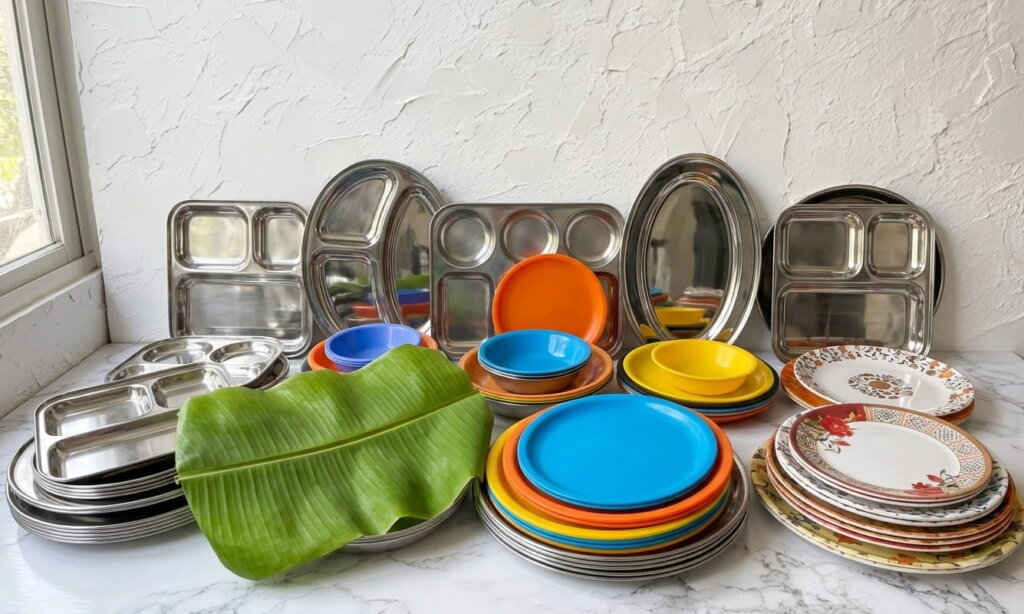
Before we compare, here is a brief snapshot of what each material offers:
Stainless Steel Thali — Made from food-grade, BIS-certified steel. Non-reactive, rust-resistant, extremely durable, and fully recyclable. Used across Indian households, institutional canteens, and hospitality businesses for decades.
Plastic Tray/Plate — Lightweight and inexpensive. Widely used in fast food, takeaway, and low-cost canteen settings. However, raises serious health and environmental concerns with prolonged use.
Melamine Plate — A resin-based material that mimics the look of ceramic. Attractive and chip-resistant but carries chemical safety concerns, especially when used with hot or acidic food.
Banana Leaf — The traditional South Indian serving choice. Completely natural, biodegradable, and adds a cultural flavour to festive meals. Practical only for single-use occasions.
Now, let us go deeper.
Stainless Steel Thali vs Plastic Tray — Why Steel Wins Every Time
Plastic plates and trays are everywhere in India — in dhabas, school canteens, takeaway counters, and households looking for a budget option. But the hidden costs of plastic are far higher than the price tag suggests.
Chemical Safety
Plastic plates — especially those made from low-grade polymers — can leach BPA (Bisphenol A) and other harmful chemicals into food, particularly when the food is hot, oily, or acidic. Common Indian dishes like dal, sambar, tamarind-based curries, and hot sabzis are precisely the kinds of foods that accelerate this leaching.
Stainless steel, by contrast, is completely inert. It does not react with food regardless of temperature, acidity, or cooking time — making it the only truly food-safe option for daily Indian meals.
Durability and Lifespan
A decent plastic tray cracks, warps, and discolours within months of regular use and dishwasher cleaning. Over a 10-year period, you would replace dozens of plastic plates at a continuing cost.
A stainless steel thali — like those manufactured by Raj Metal Industries — maintains its structural integrity and mirror finish through decades of daily use, stacking, and repeated washing. The total cost of ownership is dramatically lower.
Hygiene
Plastic develops micro-cracks over time that trap bacteria, food particles, and persistent odours. No amount of scrubbing fully eliminates contamination from a scratched plastic surface.
Stainless steel has a non-porous, smooth surface that does not harbour bacteria, mould, or food odours. It can be sanitised at high temperatures — which is precisely why hospitals, army messes, and industrial canteens across India have standardised on stainless steel thalis for decades.
Environmental Impact
Every plastic plate is a future waste problem. Single-use plastic trays go straight to landfill. Even “reusable” plastic plates are recycled poorly and contribute to microplastic pollution in soil and water.
Stainless steel is 100% recyclable at end of life — with zero environmental burden. One stainless steel thali replaces hundreds of plastic plates over its working life.
Verdict: Stainless steel beats plastic on safety, hygiene, durability, and environmental impact — without exception.
Stainless Steel Thali vs Melamine Plate — The Looks Aren’t Worth the Risk
Melamine plates have gained popularity in Indian restaurants and households for their vibrant colours and ceramic-like appearance. But there is a serious concern that most buyers are unaware of.
The Chemical Leaching Problem
Melamine is a resin made from melamine formaldehyde — a chemical compound that is known to leach into food under certain conditions. Studies have shown that melamine migration increases significantly when:
- Food is acidic (think: tomato-based gravies, tamarind dishes, lime dressings)
- Food is hot (above 70°C — standard for freshly served Indian meals)
- The plate has surface wear or micro-cracks from repeated use
Prolonged exposure to melamine has been linked to kidney damage and urinary tract issues. This is not a minor concern — it is the reason major health authorities globally advise against using melamine crockery with hot food.
Stainless steel has absolutely no such risk. It is chemically neutral and completely safe for any food at any temperature.
Durability Under Real Use Conditions
Melamine chips and develops surface cracks over time — particularly in high-volume institutional use where plates are frequently stacked, dropped, and machine-washed. Chipped melamine is not just aesthetically unpleasant; the damaged surface is unsanitary.
Stainless steel thalis are virtually unbreakable under normal use conditions. They do not chip, crack, or develop surface damage from routine washing and stacking.
Dishwasher and High-Heat Cleaning
Melamine cannot safely handle high-heat machine washing — heat accelerates chemical leaching and surface degradation. Many manufacturers specifically advise against dishwasher use for melamine products.
Stainless steel thalis are fully dishwasher-safe, retaining their finish and food-safe surface through thousands of wash cycles.
Verdict: Melamine plates pose real chemical safety concerns for everyday Indian meals. Stainless steel is the safer, more durable, and more hygienic choice.
Stainless Steel Thali vs Banana Leaf — Tradition vs Practicality
Banana leaf holds a special place in Indian food culture — especially in South India, Kerala sadya, and traditional festival meals. The natural aroma it imparts to food, its cultural significance, and its 100% biodegradable nature make it a beloved choice for special occasions.
But for daily use? The practical limitations are significant.
Availability and Cost at Scale
Banana leaf is a regional, seasonal product. It is readily available in southern and coastal India but scarce, expensive, and often unavailable in northern, eastern, and central India. For daily use across an entire household, school canteen, or restaurant, consistent supply at a reasonable price is simply not viable in most parts of the country.
Single-Use by Nature
Banana leaf is inherently single-use — you cannot wash and reuse it. For a family of four eating three meals a day, the volume of leaf waste generated is substantial. For institutional settings serving hundreds of people daily, it is entirely impractical.
Structural Limitations
A banana leaf cannot hold liquid foods — dal, sambhar, raita, and most Indian curries need a rimmed plate or a compartmentalised tray to be served properly. Banana leaves work beautifully for the right occasion; they are not a functional substitute for a thali in daily use.
Where Banana Leaf Remains Supreme
For festivals, weddings, temple prasad, and special traditional meals — banana leaf is unmatched in cultural authenticity and natural appeal. It is not a competitor to stainless steel in the truest sense; they serve entirely different purposes.
Verdict: Banana leaf is a cherished cultural tradition but not a practical choice for daily use. Stainless steel thali is the functional everyday solution.
The 5 Reasons Stainless Steel Thali Remains India’s Best Choice for Daily Use
To summarise the comparison clearly:
1. Food Safety You Can Trust Stainless steel is completely inert — it will never leach chemicals, react with food, or alter the taste of your meal. No other common plate material offers this guarantee.
2. A Lifetime of Daily Use A quality stainless steel thali lasts decades. Whether you are buying for a home kitchen or sourcing bulk thalis for a school canteen, the lifetime value is unmatched by any alternative.
3. The Highest Standard of Hygiene The non-porous, smooth surface of stainless steel does not harbour bacteria or odours and can be sanitised at high temperatures — meeting the hygiene standards of India’s most demanding institutional kitchens.
4. Dishwasher Safe, Maintenance Free No special care, no delicate handling, no restricted cleaning methods. Stainless steel thalis simply go into the dishwasher — or a good scrub under the tap — and come out as good as new.
5. Eco-Friendly for the Long Term One stainless steel thali replaces hundreds of plastic plates and thousands of single-use banana leaves over its working life. At end of life, it is 100% recyclable — making it the most environmentally responsible choice for daily use.
Choosing the Right Stainless Steel Thali for Your Needs
Not all stainless steel thalis are the same. Here is what to look for when buying — whether for home, bulk institutional supply, or hospitality use:
BIS Certification — Ensures the steel is food-grade and manufactured to Indian safety standards. Always confirm your supplier uses BIS-certified material.
Gauge (Thickness) — Heavier gauge (e.g., 22 GZ) is recommended for institutional and commercial use where thalis undergo daily high-volume use. Lighter gauge (26 GZ) suits household and retail applications.
Compartment Type — Traditional undivided thalis work for home use. Divided thalis — with 3, 4, or 5 compartments — are the standard for canteens, mess halls, restaurants, and hotel buffet service, keeping different dishes neatly separated.
Size — From compact 28 CM individual thalis to grand 40+ CM banquet platters, the right size depends on your serving context.
Finish — Mirror-polished stainless steel is the most popular finish for its hygienic, easy-to-clean surface and appealing presentation.
At Raj Metal Industries, we manufacture 15+ types of stainless steel thalis and trays across 50+ size variants — from 4-compartment Delux Thalis and Pav Bhaji Trays to Manchurian Trays, Deep Trays, and Oval Serving Platters — all in BIS-certified, food-grade stainless steel. With 80,000+ units produced monthly and 40+ years of manufacturing experience, we supply to households, institutional buyers, hospitality businesses, and export partners worldwide.
Frequently Asked Questions
Is stainless steel thali safe for hot food?
Yes, completely. Stainless steel is non-reactive and does not leach any chemicals or substances into food regardless of temperature. It is the safest material for serving hot Indian meals.
Can I use a stainless steel thali in the dishwasher?
Yes. Stainless steel thalis are fully dishwasher-safe and retain their finish and food-safe surface through thousands of wash cycles without any degradation.
How long does a stainless steel thali last?
With normal daily use and basic care, a quality stainless steel thali from a reputed manufacturer can last 20–30 years or more. It is a genuine lifetime purchase.
Which grade of stainless steel is best for a thali?
Food-grade stainless steel with BIS certification is the minimum standard to look for. For institutional and high-volume use, a heavier gauge (22 GZ) is recommended.
Is stainless steel thali eco-friendly?
Yes. Stainless steel is 100% recyclable at end of life and replaces large volumes of plastic and single-use products over its working life — making it one of the most environmentally responsible choices for daily serving.
Conclusion — The Thali That Serves You for a Lifetime
India has eaten from stainless steel thalis for generations — and for good reason. In a country where food is central to culture, family, and daily life, the plate you eat from deserves the same care as the meal on it.
Plastic leaches chemicals. Melamine poses health risks with hot food. Banana leaf, while culturally irreplaceable, is not a practical everyday solution. Stainless steel thali is the clear choice — on safety, hygiene, durability, environmental impact, and long-term value.
Whether you are outfitting a family kitchen, sourcing bulk thalis for a school or hospital canteen, or procuring serving trays for a hotel or restaurant, stainless steel is the only material that delivers on every dimension that matters.
Explore our full range of stainless steel thalis and trays at Raj Metal Industries — BIS-certified, food-grade, available in 15+ types and 50+ size variants, with bulk supply and export capability.
Contact us today for product catalogues, pricing, and bulk order enquiries.